Lawyer SEO Marketing: Complete Guide to Rank Higher in 2024

TL;DR: Lawyer SEO marketing helps law firms improve their online visibility through strategies like keyword optimization, local SEO, content creation, and link building. It focuses on ranking higher in search results for legal services, attracting potential clients actively searching for attorneys, and establishing credibility through optimized websites and Google Business profiles.
Frequently Asked Questions
What is lawyer SEO marketing?
Lawyer SEO marketing is the practice of optimizing a law firm's website and online presence to rank higher in search engine results for legal services. It involves keyword research targeting legal terms, creating valuable content about legal topics, building authoritative backlinks, and implementing technical SEO strategies. This helps potential clients find attorneys when searching for legal representation online.
How does SEO engine optimization work for law firms?
SEO engine optimization for law firms works by improving website visibility through on-page optimization, technical SEO, and content strategies. It includes optimizing title tags and meta descriptions with legal keywords, creating practice area pages, building local citations, and earning quality backlinks from legal directories. Search engines then rank the optimized content higher, driving more qualified leads to the firm.
What are the best SEO marketing tools for lawyers?
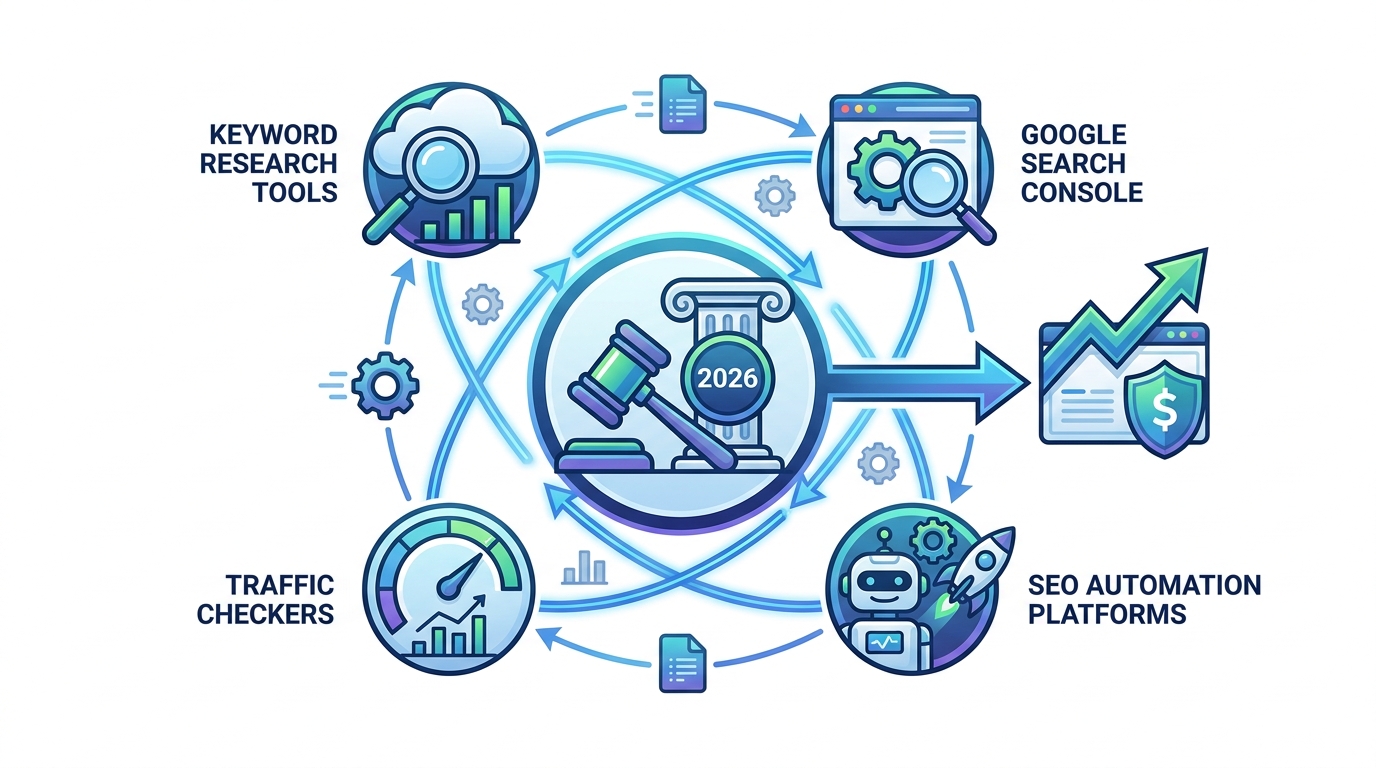
The best SEO marketing tools for lawyers include Google Search Console for monitoring website performance, keyword research tools for finding legal search terms, page traffic checkers to analyze competitor strategies, and SEO automation platforms that streamline content creation. These tools help law firms identify opportunities, track rankings, analyze website traffic patterns, and optimize their online presence efficiently.
How can lawyers use Google Search Console for SEO?
Lawyers can use Google Search Console webmaster tools to monitor their website's search performance, identify which legal keywords drive traffic, and discover technical issues affecting rankings. The platform shows click-through rates, search impressions, and indexing status. Attorneys can submit sitemaps, fix crawl errors, and analyze which practice area pages perform best in search results.
Why do law firms need SEO optimization services?
Law firms need SEO optimization services because legal markets are highly competitive online, and most potential clients search for attorneys through search engines. Professional SEO optimization service providers help lawyers rank for valuable keywords, improve website authority, and generate consistent organic traffic. This reduces dependence on expensive paid advertising while building long-term visibility and credibility.
How do website traffic checkers help with lawyer SEO?
Website traffic checkers help with lawyer SEO by providing insights into visitor behavior, traffic sources, and competitor performance. These page traffic checker tools reveal which legal keywords drive the most visitors, how users navigate the site, and where potential clients drop off. Lawyers can use this data to refine their SEO strategy and improve conversion rates.
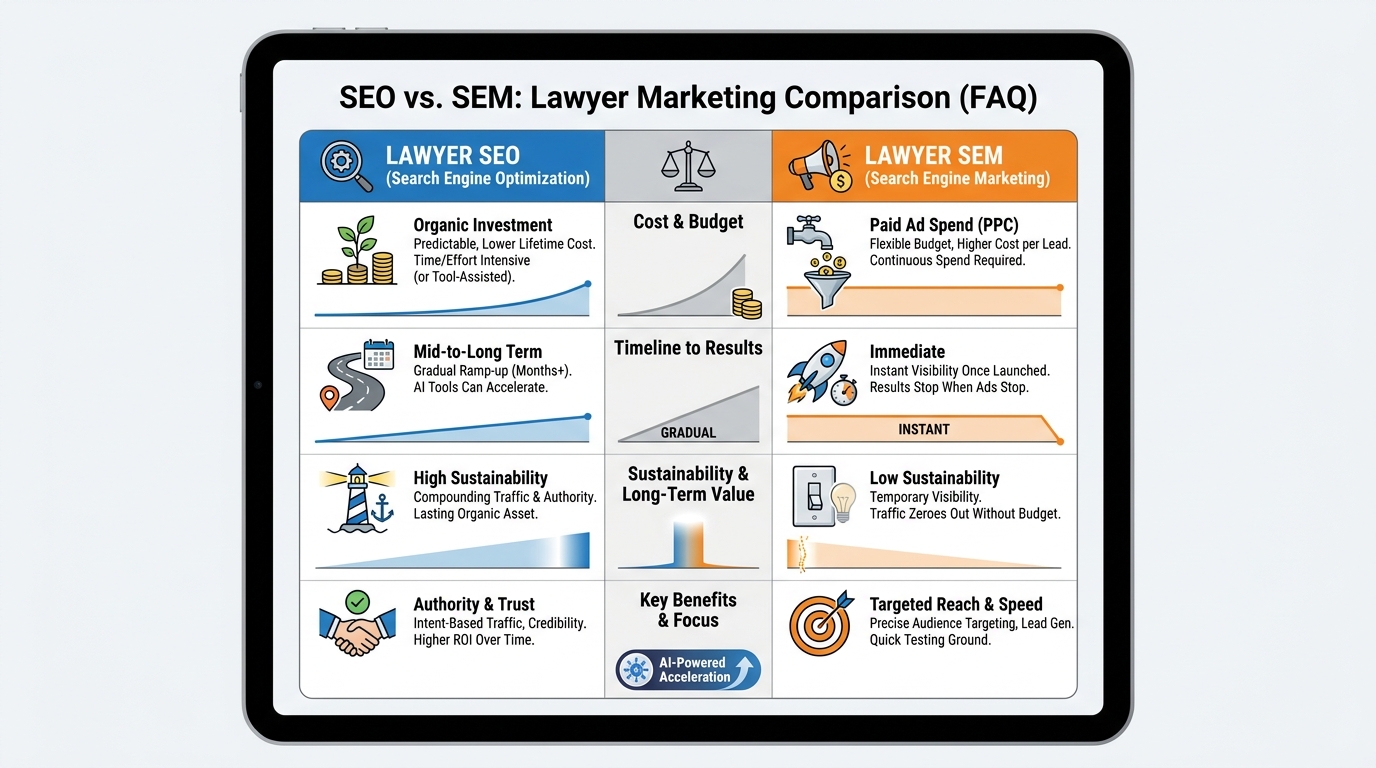
What is the difference between SEO and search engine marketing for lawyers?
SEO focuses on organic rankings through content optimization and technical improvements, while search engine marketing includes both organic SEO and paid advertising like Google Ads. For lawyers, SEO provides long-term sustainable traffic at lower costs, whereas paid search engine marketing delivers immediate visibility but requires ongoing ad spend. Most successful law firms combine both strategies.
How can AI-powered SEO tools help lawyers grow organic traffic?
AI-powered SEO tools help lawyers grow organic traffic by automating keyword research to find high-intent legal queries, generating SEO-optimized content for practice areas, and identifying technical optimization opportunities. These automation tools analyze search patterns, suggest content topics that potential clients search for, and streamline the SEO process, allowing attorneys to rank faster without extensive manual effort.
Understanding the Power of Lawyer SEO Marketing in 2026
In today's digital-first world, lawyer SEO marketing has become the cornerstone of successful law firm growth strategies. Legal professionals who master search engine optimization techniques gain a significant competitive advantage, attracting qualified leads precisely when potential clients need legal assistance most. 📈
The legal industry has transformed dramatically over the past decade. Traditional advertising methods like billboards and Yellow Pages listings have given way to sophisticated digital marketing strategies that leverage seo search optimization and data-driven insights. Law firms that embrace these changes consistently outperform competitors who rely solely on referrals and outdated marketing tactics.
This comprehensive guide explores proven lawyer SEO marketing strategies that drive measurable results. Whether you're a solo practitioner or managing a multi-location firm, understanding how to optimize your online presence is no longer optional—it's essential for sustainable growth.
Why Lawyer SEO Marketing Matters More Than Ever
The legal marketplace has become increasingly competitive, with potential clients conducting extensive online research before making contact with an attorney. Studies consistently show that over 90% of legal consumers begin their search for legal services online, making your digital presence the first—and often most important—impression you'll make.
The Client Journey Has Changed Fundamentally
Modern legal clients follow a predictable digital journey before hiring an attorney. They start with broad searches like "personal injury lawyer near me" or "divorce attorney [city name]," then narrow their research by reviewing multiple websites, reading reviews, and comparing credentials.
Effective seo engine optimization ensures your law firm appears at critical decision-making moments throughout this journey. Without strategic optimization, even the most qualified attorneys remain invisible to potential clients actively seeking their services.
- Increased visibility: Proper SEO places your firm in front of high-intent searchers
- Cost-effective lead generation: Organic traffic provides better ROI than paid advertising over time
- Credibility building: High search rankings signal authority and trustworthiness
- 24/7 marketing: Your optimized website works continuously to attract potential clients
- Competitive advantage: Most law firms still underutilize advanced SEO techniques
The ROI of Strategic Legal SEO Investment
Unlike traditional advertising that stops generating results the moment you stop paying, lawyer SEO marketing creates compounding returns. Well-optimized content continues attracting qualified leads months and years after publication, making it one of the most cost-effective marketing investments available to legal professionals.
Firms that implement comprehensive SEO strategies typically see 40-60% of their new client inquiries originating from organic search within 12-18 months. This sustainable lead generation channel reduces dependence on expensive pay-per-click campaigns and creates predictable growth patterns.
Essential Components of Successful Lawyer SEO Marketing
Building an effective lawyer SEO marketing strategy requires understanding multiple interconnected components. Each element plays a specific role in improving your search visibility and converting visitors into clients. ⚖️
Technical SEO Foundation
Before diving into content creation and link building, your website must have solid technical infrastructure. This foundation ensures search engines can properly crawl, index, and rank your pages.
| Technical Element | Impact on Rankings | Implementation Priority |
|---|---|---|
| Mobile Responsiveness | Critical - Google mobile-first indexing | High |
| Page Speed Optimization | High - Core Web Vitals ranking factor | High |
| SSL Certificate (HTTPS) | Essential - Security ranking signal | Critical |
| XML Sitemap | Medium - Helps search engine discovery | Medium |
| Structured Data Markup | Medium - Enhances search appearance | Medium |
Tools like webmaster tools google search console provide invaluable insights into your site's technical health. Regular monitoring helps identify crawl errors, indexing issues, and mobile usability problems before they impact your rankings.
Keyword Research and Search Intent Analysis
Effective lawyer SEO marketing begins with understanding exactly what potential clients search for when seeking legal services. Generic keywords like "lawyer" or "attorney" are too broad and competitive to target effectively.
Instead, focus on specific, high-intent keywords that indicate immediate need for legal services. These typically include location modifiers, practice area specifics, and problem-focused phrases that demonstrate clear intent.
Using a Free Search Intent Analyzer helps identify whether searchers want informational content, are comparing options, or are ready to hire an attorney immediately. This understanding shapes your content strategy and ensures you're creating resources that match user needs.
Local SEO Optimization for Law Firms
Most legal services are location-dependent, making local SEO critical for law firm success. Potential clients typically search for attorneys within their geographic area, creating opportunities for firms that optimize for local search.
Key local SEO elements include:
- Google Business Profile optimization: Complete every section with accurate, keyword-rich information
- NAP consistency: Ensure your Name, Address, and Phone number match exactly across all online directories
- Local citations: Build presence on legal-specific directories like Avvo, FindLaw, and Justia
- Location-specific content: Create pages targeting each service area you serve
- Review generation: Systematically request and respond to client reviews
Implementing Best Local SEO Audit Tools to Boost Rankings Fast helps identify gaps in your local optimization strategy and uncovers opportunities competitors may be missing.
Content Strategy for Legal SEO Success
Content remains the foundation of effective seo search optimization for law firms. High-quality, informative content serves multiple purposes: educating potential clients, demonstrating expertise, and providing search engines with relevant material to rank. 📝
Creating Practice Area Pages That Convert
Your practice area pages represent some of your website's most important real estate. These pages should comprehensively cover specific legal services while incorporating relevant keywords naturally throughout the content.
Effective practice area pages include:
- Detailed explanation of the legal issue and your approach
- Clear descriptions of your experience and qualifications
- Case results and testimonials (where ethically appropriate)
- Answers to frequently asked questions
- Strong calls-to-action encouraging consultation requests
- Location-specific information for local relevance
Tools like the Free SEO Title Generator help craft compelling page titles that balance keyword optimization with click-through appeal. Similarly, the Free Meta Description Generator creates descriptions that improve search appearance and encourage clicks.
Building Authority Through Legal Blog Content
Regular blog publishing establishes your expertise while creating opportunities to rank for informational keywords that attract potential clients early in their research journey. This content builds trust before prospects ever contact your firm.
Effective legal blog topics address:
- Common legal questions and misconceptions
- Recent changes in relevant laws and regulations
- Step-by-step guides for legal processes
- Case studies and lessons from notable cases
- Industry news and commentary
The Free Long Tail Keyword Generator identifies specific question-based keywords that align perfectly with educational blog content. These long-tail keywords typically have lower competition while attracting highly qualified traffic.
Content Optimization Best Practices
Creating content is only half the battle—proper optimization ensures search engines understand and rank your material appropriately. Every piece of content should follow SEO best practices while maintaining readability and value for human readers.
| Optimization Element | Best Practice | Common Mistake |
|---|---|---|
| Keyword Placement | Include primary keyword in first 100 words, headings, and naturally throughout | Keyword stuffing or unnatural repetition |
| Content Length | 1,500-2,500 words for comprehensive topics | Thin content under 500 words |
| Internal Linking | 3-5 relevant internal links per article | No internal links or excessive linking |
| Image Optimization | Descriptive file names, alt text, compressed files | Generic names, missing alt text, large files |
| Mobile Formatting | Short paragraphs, subheadings, bullet points | Long text blocks difficult to scan |
Leveraging SEO Marketing Tools for Law Firms
Modern lawyer SEO marketing requires sophisticated seo marketing tools that provide data-driven insights and automate time-consuming tasks. The right technology stack dramatically improves efficiency while delivering better results. 🔧
Essential SEO Tools Every Law Firm Needs
Building an effective SEO toolkit involves selecting platforms that address specific aspects of your optimization strategy. While comprehensive solutions exist, most firms benefit from combining specialized tools that excel in particular areas.
Keyword Research and Analysis Tools: These platforms help identify valuable search terms and assess competition levels. Understanding search volume, keyword difficulty, and related terms guides your content strategy and ensures you're targeting winnable keywords.
Rank Tracking and Monitoring: A reliable page traffic checker and ranking monitor shows how your optimization efforts translate into improved search positions. Regular monitoring helps identify trends, measure campaign effectiveness, and spot potential issues early.
Technical SEO Auditing: Comprehensive site audits identify technical issues that may be limiting your search performance. These tools crawl your website like search engines do, revealing problems with page speed, mobile usability, broken links, and other technical factors.
Competitor Analysis Platforms: Understanding what competitors are doing successfully helps inform your own strategy. Tools that Find Competitor Sites to Boost Your SEO Strategy Today reveal their keyword targets, backlink profiles, and content approaches.
Automation and AI-Powered SEO Solutions
The emergence of AI Search Engine Optimization Tools That Drive Real Traffic has revolutionized how law firms approach SEO. These platforms use machine learning to identify opportunities, generate content ideas, and automate repetitive tasks that previously consumed hours of manual work.
AI-powered tools excel at:
- Analyzing search intent and matching content to user needs
- Identifying content gaps in your existing website
- Generating SEO-optimized content outlines and drafts
- Predicting keyword difficulty and ranking potential
- Automating technical optimization recommendations
Platforms like IntentRank - AI-Powered SEO Automation Tool specifically address the needs of businesses seeking to scale their organic traffic through intelligent automation. These solutions reduce the technical complexity of SEO while delivering enterprise-level results.
Analytics and Performance Measurement
Effective lawyer SEO marketing requires continuous measurement and refinement. A robust website traffic checker provides essential insights into visitor behavior, conversion patterns, and content performance.
Key metrics to monitor include:
- Organic traffic volume: Total visitors from search engines
- Keyword rankings: Position changes for target search terms
- Conversion rate: Percentage of visitors who contact your firm
- Bounce rate: Visitors who leave without engaging
- Pages per session: How deeply visitors explore your site
- Time on page: Engagement level with your content
Regular analysis of these metrics through webmaster tools google search console and analytics platforms helps identify what's working and where improvements are needed. This data-driven approach ensures your SEO investment generates measurable returns.
Link Building Strategies for Legal Websites
Quality backlinks remain one of the most powerful ranking factors in search engine algorithms. For law firms, strategic link building demonstrates authority and relevance while improving search visibility across targeted keywords. 🔗
Ethical Link Building Approaches for Attorneys
Legal professionals must be particularly careful about link building tactics, as bar associations have strict rules about advertising and solicitation. Focus on earning links through genuine value creation rather than manipulative tactics that could violate ethical guidelines or search engine policies.
Effective legal link building strategies include:
- Guest contributions to legal publications: Write for respected industry websites and legal journals
- Local business partnerships: Develop relationships with complementary local businesses
- Speaking engagements and presentations: Conference organizers often link to speaker websites
- Legal resource creation: Develop valuable tools or guides that others naturally reference
- Media commentary: Provide expert analysis for journalists covering legal stories
- Bar association involvement: Active participation often results in profile links
Content-Driven Link Acquisition
The most sustainable link building approach involves creating content so valuable that other websites naturally want to reference it. This "linkable asset" strategy requires more upfront investment but generates ongoing returns without continuous outreach.
High-performing linkable assets for law firms include:
- Comprehensive legal guides covering complex topics in accessible language
- Original research or surveys about legal issues or industry trends
- Interactive tools like calculators or assessment quizzes
- Infographics visualizing legal data or processes
- Video content explaining complicated legal concepts
Promoting these assets through strategic outreach increases their visibility and link acquisition potential. Focus on reaching journalists, bloggers, and organizations that serve your target audience.
Advanced Lawyer SEO Marketing Techniques
Once you've mastered fundamental optimization, advanced techniques can further differentiate your firm from competitors and capture additional market share. These strategies require more sophistication but deliver outsized results. 🚀
Schema Markup for Legal Services
Structured data markup helps search engines understand your content's context and meaning. For law firms, implementing appropriate schema can enhance search appearance with rich snippets, improve local pack visibility, and increase click-through rates.
Relevant schema types for legal websites include:
- Attorney schema: Provides detailed information about lawyers and their credentials
- LegalService schema: Describes specific legal services offered
- LocalBusiness schema: Enhances local search presence with detailed business information
- Review schema: Displays star ratings in search results
- FAQPage schema: Features question-answer content prominently in search
Voice Search Optimization
The rise of voice-activated assistants has changed how people search for legal services. Voice queries tend to be longer, more conversational, and question-based compared to typed searches.
Optimizing for voice search involves:
- Targeting natural language, question-based keywords
- Creating FAQ sections that directly answer common questions
- Optimizing for featured snippets (position zero)
- Ensuring fast page load times on mobile devices
- Focusing on local SEO signals for "near me" searches
Content Clustering and Topic Authority
Rather than creating isolated blog posts, advanced content strategies organize related articles into topic clusters. This approach establishes comprehensive coverage of specific legal areas while creating strong internal linking structures that boost rankings across all related pages.
A content cluster consists of:
- Pillar page: Comprehensive overview of a broad topic (e.g., "Complete Guide to Personal Injury Claims")
- Cluster content: Detailed articles covering specific subtopics (e.g., "Car Accident Settlements," "Medical Malpractice Claims," "Slip and Fall Cases")
- Strategic internal linking: Cluster content links to the pillar page and related cluster articles
This structure signals topical authority to search engines while creating an intuitive information architecture for visitors exploring related topics.
Measuring and Forecasting SEO Success
Effective lawyer SEO marketing requires understanding not just current performance, but projected future results. Master Forecasting SEO Traffic: Boost Organic Growth Today helps set realistic expectations and justify continued investment in optimization efforts. 📊
Key Performance Indicators for Legal SEO
Tracking the right metrics ensures you're measuring actual business impact rather than vanity metrics that don't correlate with revenue growth. Focus on indicators that directly connect to new client acquisition.
| KPI | What It Measures | Target Benchmark |
|---|---|---|
| Organic Traffic Growth | Month-over-month increase in search visitors | 15-25% quarterly growth |
| Keyword Rankings | Position improvements for target terms | Top 3 positions for primary keywords |
| Conversion Rate | Visitors who submit contact forms | 3-5% for legal services |
| Cost Per Acquisition | SEO investment divided by new clients | Lower than PPC alternatives |
| Backlink Growth | Quality links acquired over time | 5-10 quality links monthly |
Attribution and ROI Calculation
Accurately attributing new clients to SEO efforts can be challenging, especially when prospects interact with multiple touchpoints before converting. Implement tracking systems that capture the complete client journey from initial search to consultation booking.
Effective attribution requires:
- Call tracking numbers on your website to identify source of phone inquiries
- Form submissions that capture how visitors found your site
- CRM integration to track which leads convert to paying clients
- Consistent UTM parameter usage for campaign tracking
- Regular reconciliation of analytics data with actual new client intake
Competitive Benchmarking
Understanding your performance relative to competitors provides context for your results and identifies areas requiring additional focus. Regular competitive analysis reveals market trends and emerging opportunities.
Monitor competitor performance across:
- Keyword rankings for shared target terms
- Content publishing frequency and topics
- Backlink acquisition rates and sources
- Technical site improvements and features
- Local search visibility and review generation
Tools that help you Find Competitor Sites to Boost Your SEO Strategy Today streamline this analysis and ensure you're not missing critical competitive intelligence.
Choosing Professional SEO Optimization Services
Many law firms eventually reach a point where managing SEO internally becomes impractical. Whether due to complexity, time constraints, or desire for specialized expertise, partnering with professional seo optimization services can accelerate results. 🤝
When to Consider Professional SEO Help
Several indicators suggest it's time to engage professional seo optimization service providers:
- Your organic traffic has plateaued despite ongoing efforts
- Technical issues exceed your team's expertise to resolve
- Competitors consistently outrank you for important keywords
- You lack time to implement comprehensive optimization strategies
- Recent algorithm updates have negatively impacted your rankings
- You're expanding to new practice areas or locations
Evaluating SEO Service Providers
The legal SEO marketplace includes both highly skilled specialists and questionable operators making unrealistic promises. Careful vetting ensures you partner with providers who understand both SEO and the unique constraints of legal marketing.
Key questions to ask prospective SEO partners:
- What experience do you have specifically with law firm SEO?
- Can you provide case studies with measurable results?
- What specific tactics and strategies will you employ?
- How do you stay current with search engine algorithm changes?
- What reporting and communication cadence do you provide?
- Do you guarantee compliance with bar association advertising rules?
- What happens to content and links if we end the engagement?
Be wary of providers who guarantee specific rankings, promise immediate results, or can't explain their methodology in understandable terms. Quality SEO requires time, expertise, and ethical practices.
In-House vs. Agency vs. Hybrid Approaches
Different organizational models offer distinct advantages depending on your firm's size, budget, and internal capabilities:
| Approach | Best For | Advantages | Challenges |
|---|---|---|---|
| Fully In-House | Large firms with ongoing needs | Direct control, deep firm knowledge | Expensive, limited expertise breadth |
| Full-Service Agency | Firms wanting comprehensive support | Broad expertise, scalable resources | Higher cost, less firm-specific focus |
| Hybrid Model | Mid-size firms with some capacity | Cost-effective, strategic guidance | Requires coordination, clear responsibilities |
| Automation Platform | Tech-savvy firms seeking efficiency | Lower cost, data-driven insights | Requires some internal expertise |
Platforms like IntentRank offer a fourth option: AI-powered automation that delivers professional-grade results without the overhead of traditional agencies. This approach particularly appeals to growth-focused firms that want sophisticated SEO capabilities without building large internal teams.
Common Lawyer SEO Marketing Mistakes to Avoid
Understanding what not to do is equally important as knowing best practices. These common mistakes undermine SEO effectiveness and can even result in penalties that damage your search visibility. ⚠️
Technical and Content Errors
Many law firms inadvertently sabotage their SEO through preventable technical issues and content mistakes:
- Duplicate content across practice areas: Simply changing city names while keeping identical content hurts rankings
- Neglecting mobile optimization: With mobile-first indexing, poor mobile experience severely limits visibility
- Ignoring page speed: Slow-loading pages frustrate visitors and rank lower
- Thin, low-quality content: Brief, generic pages provide little value and rarely rank well
- Keyword stuffing: Unnatural keyword repetition triggers quality filters
- Missing or poorly optimized meta tags: Wasted opportunity to improve click-through rates
Link Building and Off-Page Missteps
Aggressive or manipulative link building tactics can result in manual penalties that devastate your search visibility:
- Purchasing links from link farms or low-quality directories
- Participating in reciprocal link schemes
- Using exact-match anchor text excessively
- Building links too quickly (appearing unnatural)
- Ignoring link quality in favor of quantity
Strategic and Expectation Errors
Beyond tactical mistakes, strategic misalignment often undermines SEO success:
- Expecting immediate results: Meaningful SEO results typically require 4-6 months minimum
- Targeting overly competitive keywords: Going after terms dominated by major legal directories wastes resources
- Neglecting local optimization: For most attorneys, local visibility matters more than national rankings
- Inconsistent effort: SEO requires ongoing commitment, not one-time optimization
- Ignoring user experience: Search engines increasingly prioritize sites that provide excellent visitor experiences
Future Trends in Legal SEO and Search Marketing
The SEO landscape continues evolving rapidly, with new technologies and user behaviors reshaping how law firms must approach search optimization. Staying ahead of these trends positions your firm for sustained competitive advantage. 🔮
AI and Machine Learning Impact
Artificial intelligence is fundamentally changing both how search engines evaluate content and how marketers optimize for search. Google's algorithms increasingly understand context, intent, and content quality through sophisticated natural language processing.
This evolution means:
- Content quality and comprehensiveness matter more than keyword density
- Search engines better understand synonyms and related concepts
- User engagement signals play larger roles in ranking algorithms
- Automated content generation tools become more sophisticated
- Personalization makes search results increasingly individual
Law firms that leverage AI Search Engine Optimization Tools gain efficiency advantages while producing higher-quality optimization at scale.
Search Experience Evolution
How people search and consume information continues changing, requiring adaptation in optimization approaches:
- Zero-click searches: More queries are answered directly in search results without site visits
- Visual search growth: Image and video search become more prevalent
- Voice search maturation: Conversational queries require different optimization approaches
- Local pack dominance: Map results increasingly dominate local service searches
- Featured snippet importance: Position zero captures significant traffic
Privacy and Tracking Changes
Increasing privacy regulations and browser changes limiting tracking capabilities affect how we measure and optimize SEO performance. Third-party cookie deprecation and stricter data protection laws require new approaches to analytics and attribution.
Adapting to this privacy-first environment involves:
- Implementing first-party data collection strategies
- Using server-side tracking where appropriate
- Focusing on aggregate trends rather than individual user tracking
- Emphasizing conversion tracking that respects privacy preferences
- Building direct relationships with prospects through email and content
Building a Sustainable Lawyer SEO Marketing Strategy
Long-term SEO success requires viewing optimization as an ongoing strategic initiative rather than a one-time project. The most successful law firms integrate SEO into their overall marketing approach and commit to continuous improvement. 💪
Creating Your SEO Roadmap
A structured implementation plan ensures consistent progress toward your organic growth goals. Break your strategy into phases that build upon each other:
Phase 1: Foundation (Months 1-3)
- Complete technical SEO audit and fix critical issues
- Optimize existing practice area pages
- Set up proper tracking and analytics
- Establish baseline keyword rankings
- Claim and optimize Google Business Profile
Phase 2: Content Development (Months 4-6)
- Develop comprehensive keyword targeting strategy
- Create pillar content for primary practice areas
- Launch regular blog publishing schedule
- Build initial backlink foundation
- Implement schema markup
Phase 3: Expansion and Authority (Months 7-12)
- Develop content clusters around core topics
- Pursue strategic link building opportunities
- Expand into additional keyword territories
- Create linkable assets and resources
- Optimize for featured snippets
Phase 4: Refinement and Scale (Months 12+)
- Analyze performance data and double down on what works
- Update and improve existing content
- Explore emerging search opportunities
- Test advanced optimization techniques
- Scale successful strategies across additional practice areas
Resource Allocation and Budget Planning
Effective lawyer SEO marketing requires appropriate resource investment. While SEO typically delivers better ROI than paid advertising long-term, it requires patience and sustained commitment.
Typical monthly investment ranges:
| Firm Size | Monthly SEO Budget | Expected Scope |
|---|---|---|
| Solo/Small Firm | $2,000 - $5,000 | Basic optimization, limited content |
| Mid-Size Firm | $5,000 - $15,000 | Comprehensive strategy, regular content |
| Large/Multi-Location | $15,000 - $50,000+ | Aggressive expansion, multiple markets |
Automation platforms can significantly reduce these costs while maintaining quality. IntentRank specifically addresses this challenge by automating time-consuming SEO tasks that traditionally required extensive manual effort.
Continuous Learning and Adaptation
The most successful law firms treat SEO as an evolving discipline requiring ongoing education and adaptation. Search algorithms change, competitor strategies evolve, and new opportunities emerge constantly.
Stay current by:
- Following reputable SEO industry publications and thought leaders
- Attending legal marketing conferences and workshops
- Regularly reviewing your analytics for emerging patterns
- Testing new optimization techniques and measuring results
- Participating in legal marketing communities and forums
For comprehensive guidance and answers to common questions, explore the Frequently Asked Questions (FAQ) resource, which addresses typical concerns about implementing effective SEO strategies.
Take Your Law Firm's Organic Growth to the Next Level
Implementing effective lawyer SEO marketing doesn't have to be overwhelming or require massive internal resources. With the right strategy, tools, and commitment to continuous improvement, law firms of any size can dramatically increase their organic visibility and attract qualified leads consistently. 🎯
The key is getting started with a solid foundation, then building systematically toward comprehensive optimization. Whether you choose to handle SEO internally, partner with specialists, or leverage automation platforms, the important thing is taking action rather than remaining stuck in analysis paralysis.
Modern SEO technology has made sophisticated optimization accessible to firms that previously couldn't justify the investment in large agencies or in-house teams. AI-powered platforms now automate complex tasks like keyword research, content optimization, and technical auditing that once required extensive manual effort.
If you're ready to transform your law firm's online presence and establish a sustainable source of qualified leads, explore how IntentRank's AI-powered SEO automation can help you rank faster and grow organic traffic without the complexity of traditional SEO approaches. Our platform is specifically designed for growth-focused professionals who want enterprise-level results with streamlined implementation.
Start building your competitive advantage today—because every day you wait is another day potential clients are finding your competitors instead of you. Visit our website to discover how intent-based SEO automation can revolutionize your firm's digital marketing results.
Article created using IntentRank


