Automated SEO Optimization: Rank Faster with AI Tools

TL;DR: Automated SEO optimization uses AI-powered tools to streamline keyword research, content creation, and technical SEO tasks without manual effort. These platforms help businesses rank faster by automatically identifying search intent, generating optimized content, and implementing on-page improvements, saving time while scaling organic traffic growth efficiently.
Frequently Asked Questions
What is automated SEO optimization and how does it work?
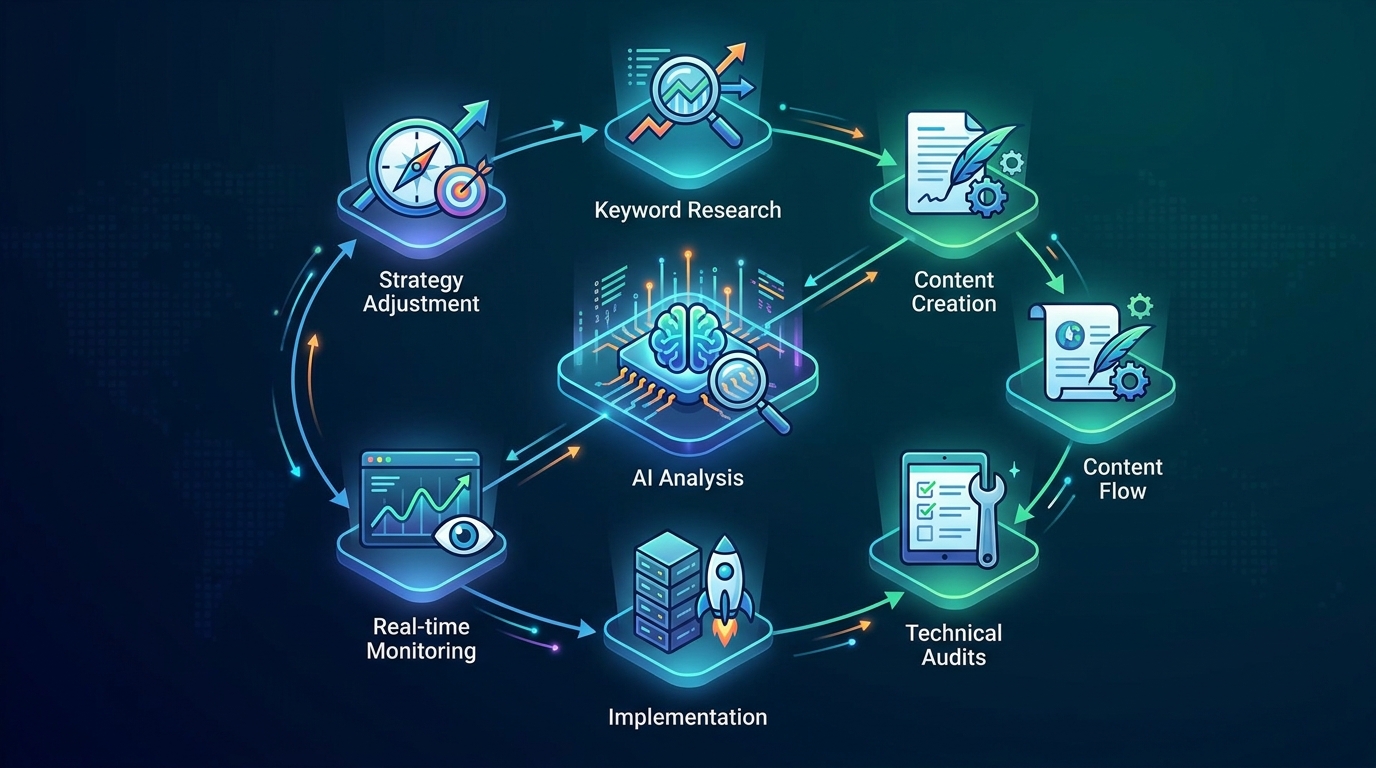
Automated SEO optimization uses AI-powered tools to streamline search engine optimization tasks like keyword research, content creation, and technical audits. These tools automatically analyze your website's performance, identify optimization opportunities, and implement improvements without manual intervention. By leveraging machine learning algorithms, automated SEO platforms can process large datasets quickly, monitor rankings in real-time, and adjust strategies to help businesses rank faster and grow organic traffic efficiently.
How much do SEO optimization services cost for automated tools?
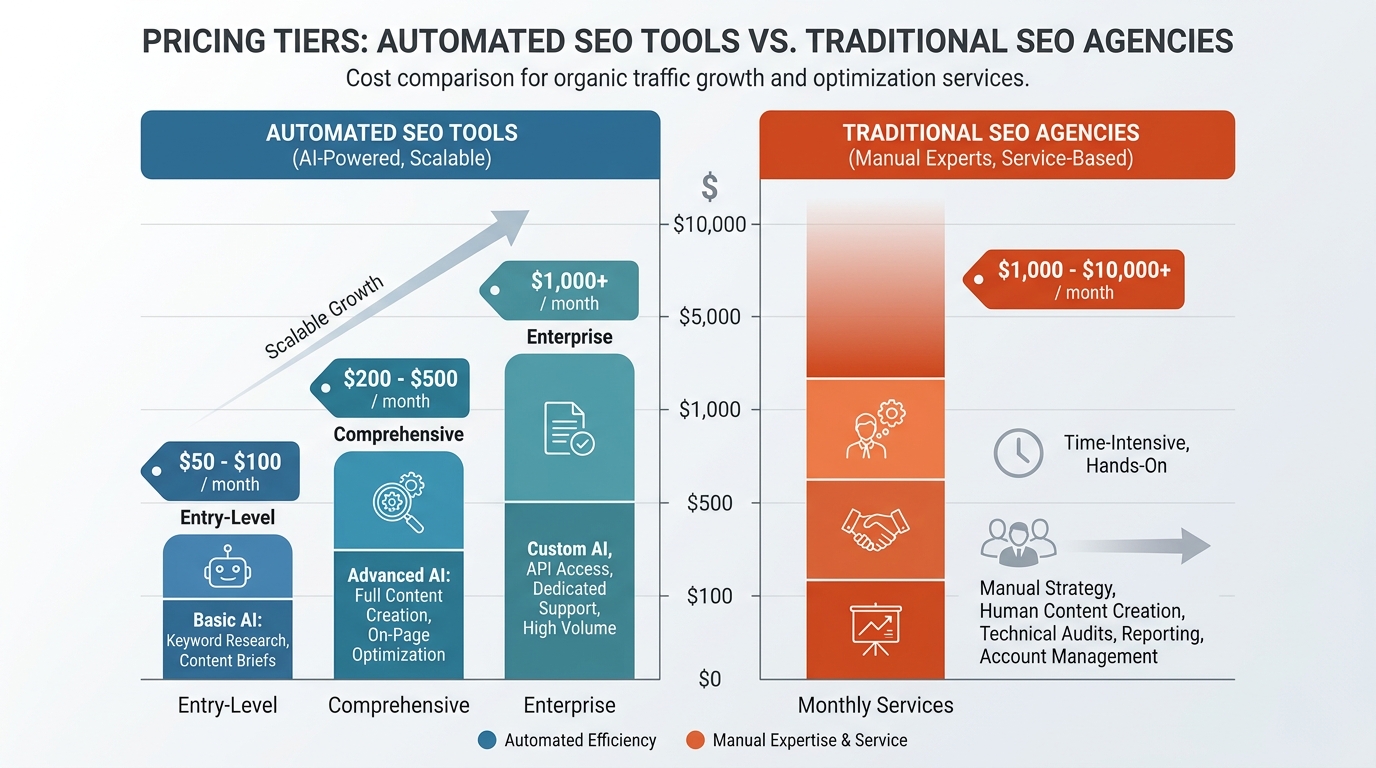
Automated SEO optimization services typically range from $50 to $500 per month, depending on features and scale. Entry-level tools offer basic keyword research and site audits for $50-$100 monthly, while comprehensive platforms with AI content creation, automated link building, and advanced analytics cost $200-$500. Enterprise solutions may exceed $1,000 monthly. These automated services are significantly more cost-effective than traditional SEO agencies, which charge $1,000-$10,000+ monthly for similar results.
What are the best SEO marketing tools for automation?
Top SEO marketing tools for automation include platforms that combine keyword research, content optimization, and performance tracking. Leading solutions offer automated rank tracking, competitor analysis, technical SEO audits, and AI-powered content suggestions. Essential features include integration with Google Search Console, automated reporting, backlink monitoring, and on-page optimization recommendations. The best tools provide intent-based keyword targeting, automated content briefs, and real-time performance dashboards to help founders scale organic traffic without hiring large SEO teams.
Can automated SEO tools integrate with Google Search Console and webmaster tools?
Yes, most automated SEO optimization platforms integrate directly with Google Search Console and webmaster tools to pull real-time performance data. These integrations allow automated systems to monitor search queries, click-through rates, indexing status, and technical issues automatically. By connecting to Search Console, automated tools can identify ranking opportunities, track keyword performance, detect crawl errors, and receive alerts about site health issues, enabling data-driven optimization decisions without manual data collection.
How does automated SEO optimization improve website traffic faster than manual methods?
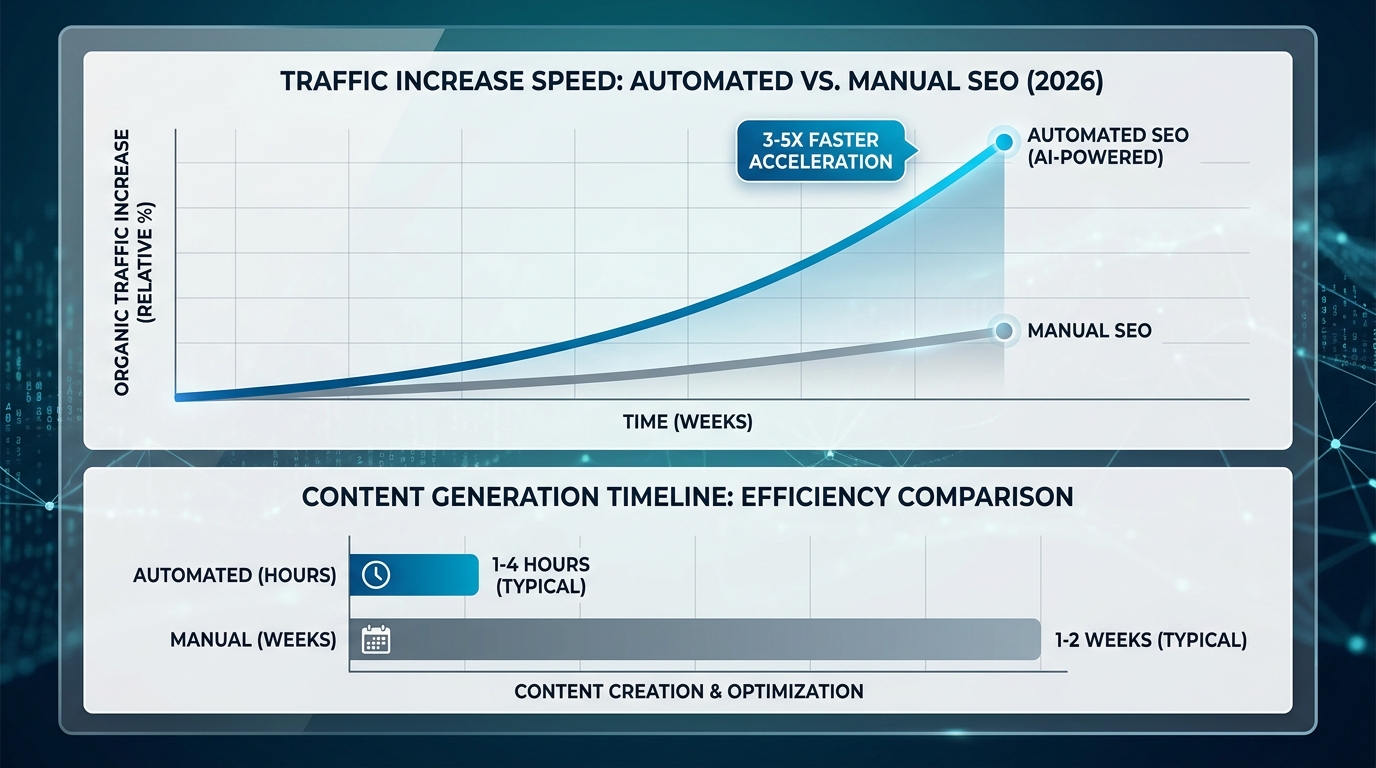
Automated SEO optimization accelerates traffic growth by processing data and implementing changes at scale. AI-powered tools analyze thousands of keywords simultaneously, identify high-intent opportunities instantly, and generate optimized content in hours instead of weeks. Automated systems continuously monitor rankings, adjust strategies in real-time, and implement technical fixes immediately. This speed advantage allows businesses to capitalize on trending topics, outpace competitors, and achieve measurable traffic increases 3-5x faster than traditional manual SEO approaches.
What features should I look for in an automated SEO optimization service?
Essential features in automated SEO optimization services include AI-powered keyword research with intent analysis, automated content creation and optimization, technical SEO audits, rank tracking, and competitor analysis. Look for tools offering integration with Google Search Console, automated internal linking suggestions, page traffic checker capabilities, backlink monitoring, and customizable reporting. The best services provide automated content briefs, on-page SEO recommendations, schema markup implementation, and real-time alerts for ranking changes or technical issues affecting your site's performance.
Is automated SEO optimization suitable for small businesses and startups?
Yes, automated SEO optimization is ideal for small businesses and startups with limited resources. These tools eliminate the need for expensive SEO agencies or full-time specialists by automating time-consuming tasks like keyword research, content optimization, and performance monitoring. Founders can grow organic traffic independently using AI-powered recommendations and automated workflows. Most platforms offer affordable pricing tiers, intuitive interfaces, and scalable features that grow with your business, making professional-grade SEO accessible to companies with small budgets.
How do page traffic checkers and website traffic checkers work in automated SEO tools?
Page traffic checkers and website traffic checkers in automated SEO tools monitor visitor data, traffic sources, and user behavior across your site. These features integrate with analytics platforms to track organic search performance, identify high-performing pages, and detect traffic drops automatically. Automated systems analyze traffic patterns, compare performance against competitors, and provide actionable insights for optimization. Real-time monitoring alerts you to sudden changes, while historical data helps identify seasonal trends and measure the ROI of your SEO optimization efforts.
Understanding Automated SEO Optimization in 2026
In today's digital landscape, automated SEO optimization has transformed from a futuristic concept into an essential strategy for businesses seeking to dominate search rankings. As search engines evolve and competition intensifies, manual SEO processes simply can't keep pace with the demands of modern digital marketing. 🚀
Automated SEO optimization leverages artificial intelligence and machine learning to streamline time-consuming tasks like keyword research, content creation, technical audits, and performance tracking. This approach to seo engine optimization enables businesses to scale their organic traffic efforts while maintaining quality and consistency across all optimization activities.
The shift toward automation doesn't eliminate the need for human expertise—instead, it amplifies what SEO professionals can accomplish. By automating repetitive tasks, marketers can focus on strategic decision-making, creative content development, and building meaningful relationships with their audience.
Core Components of Automated SEO Systems
Intelligent Keyword Research and Analysis
Traditional keyword research requires hours of manual work using various seo marketing tools. Automated systems revolutionize this process by instantly analyzing search volumes, competition levels, and user intent across thousands of keyword opportunities.
Modern long tail keyword generators can identify profitable keyword clusters that manual research might miss. These tools evaluate semantic relationships, search trends, and competitive gaps to surface high-value opportunities.
- Intent-based clustering: Groups keywords by user intent (informational, commercial, transactional)
- Competitor gap analysis: Identifies keywords your competitors rank for but you don't
- Search volume forecasting: Predicts seasonal trends and emerging opportunities
- Difficulty scoring: Calculates realistic ranking probability based on your domain authority
Content Creation and Optimization Automation
Content remains the foundation of seo search optimization, but creating optimized content at scale presents significant challenges. Automated content systems address this by generating SEO-friendly articles, meta descriptions, and titles that align with search intent.
These AI search engine optimization tools analyze top-ranking content to understand what search engines reward. They then create comprehensive, well-structured content that meets both user needs and algorithmic requirements.
| Aspect | Manual Process | Automated Process |
|---|---|---|
| Time per article | 4-8 hours | 15-30 minutes |
| Keyword optimization | Variable consistency | Consistent, data-driven |
| Scalability | Limited by team size | Virtually unlimited |
| SEO best practices | Depends on writer skill | Built-in optimization |
Technical SEO Monitoring and Fixes
Technical SEO forms the foundation of search visibility, yet many businesses struggle with ongoing maintenance. Webmaster tools Google Search Console provides valuable data, but interpreting and acting on this information requires expertise and time.
Automated technical SEO platforms continuously monitor site health, identifying issues like broken links, slow page speeds, mobile usability problems, and crawl errors. More importantly, many systems can automatically implement fixes or provide detailed remediation instructions.
Benefits of Implementing Automated SEO Optimization
Exponential Scalability Without Proportional Resource Investment
Traditional seo optimization services require linear scaling—more content means more writers, more keywords means more researchers. Automation breaks this model by enabling exponential output growth with minimal resource increases.
A single marketing professional using automated SEO tools can manage campaigns that would traditionally require an entire team. This democratizes access to enterprise-level SEO capabilities for small businesses and startups with limited budgets.
Consistent Quality and Best Practice Implementation
Human error is inevitable in manual SEO processes. Writers forget to include target keywords, developers overlook meta descriptions, and analysts miss critical ranking factors. Automated systems eliminate these inconsistencies by applying best practices uniformly across all content and optimization activities.
Every piece of content generated through automated seo optimization service platforms includes proper heading hierarchy, optimal keyword density, internal linking opportunities, and meta tag optimization—guaranteed.
- ✅ Consistent keyword placement and density
- ✅ Proper HTML structure and semantic markup
- ✅ Optimized meta titles and descriptions every time
- ✅ Strategic internal linking based on site architecture
- ✅ Mobile-friendly formatting and responsive design
Real-Time Performance Tracking and Adjustment
Manual SEO reporting typically happens weekly or monthly, creating lag between performance changes and strategic adjustments. Automated systems function as a continuous page traffic checker and website traffic checker, monitoring rankings, traffic, and conversions in real-time.
When algorithms change or competitor activity shifts rankings, automated platforms detect these movements immediately and can adjust strategies accordingly. This agility provides a significant competitive advantage in fast-moving markets.
Essential Features of Automated SEO Platforms
AI-Powered Content Generation
The most advanced automated SEO systems incorporate natural language processing and machine learning to create human-quality content. These platforms analyze top-ranking articles, extract semantic patterns, and generate comprehensive content that satisfies search intent.
Modern cool SEO tools go beyond simple keyword stuffing. They understand context, maintain natural language flow, and structure information in ways that both users and search engines appreciate.
Automated Keyword Research and Intent Analysis
Understanding search intent separates effective search engine marketing from wasted effort. Automated platforms use search intent analyzers to categorize keywords and match content strategies to user needs.
This capability ensures that commercial keywords receive product-focused content while informational queries get educational articles. The result is higher engagement rates, better rankings, and improved conversion metrics.
| Intent Type | User Goal | Content Strategy | Example Keywords |
|---|---|---|---|
| Informational | Learn or understand | Educational guides, tutorials | "how to optimize SEO" |
| Commercial | Research before buying | Comparisons, reviews, lists | "best SEO tools" |
| Transactional | Ready to purchase | Product pages, pricing | "buy SEO software" |
| Navigational | Find specific site | Brand pages, login pages | "Ahrefs login" |
Comprehensive Competitor Intelligence
Successful SEO requires understanding what competitors are doing right—and where they're vulnerable. Automated platforms continuously monitor competitor strategies, helping you find competitor sites and analyze their keyword rankings, content strategies, and backlink profiles.
This intelligence informs strategic decisions about which keywords to target, what content gaps exist in your niche, and where opportunities for quick wins lie.
Integrated Performance Analytics
Effective automation requires robust measurement. Leading platforms integrate with Google Analytics, Search Console, and other data sources to provide comprehensive performance visibility. Features like forecasting SEO traffic help predict campaign outcomes and justify marketing investments.
Implementing Automated SEO: Best Practices
Start with Clear Goals and KPIs
Automation amplifies both good and bad strategies. Before implementing automated seo marketing tools, define specific, measurable objectives. Are you focused on increasing organic traffic, improving conversion rates, or dominating specific keyword clusters?
Clear goals enable you to configure automation parameters correctly and measure success accurately. Without defined objectives, you risk optimizing for vanity metrics that don't drive business results.
Maintain Human Oversight and Quality Control
While automation handles execution brilliantly, strategic direction still requires human judgment. Establish review processes to ensure automated content aligns with brand voice, factual accuracy, and audience expectations.
The most successful implementations combine AI efficiency with human creativity and oversight. Let automation handle the repetitive tasks while your team focuses on strategy, relationship building, and creative differentiation.
- 📋 Review AI-generated content before publication
- 🎯 Validate keyword selections against business priorities
- 🔍 Monitor automated changes for unintended consequences
- 💡 Inject brand personality and unique insights into automated content
- 📊 Analyze performance data to refine automation parameters
Integrate with Existing Marketing Systems
Automated SEO shouldn't exist in isolation. The most powerful implementations integrate with content management systems, marketing automation platforms, and customer relationship management tools to create seamless workflows.
This integration enables automated seo engine optimization to inform broader marketing strategies while leveraging data from multiple sources to improve targeting and personalization.
Continuously Optimize Based on Performance Data
Automation isn't a "set it and forget it" solution. Search algorithms evolve, competitor strategies shift, and user behavior changes. Regularly review performance metrics and adjust automation parameters to maintain competitive advantage.
Use A/B testing to compare automated approaches against manual methods or alternative automation strategies. Let data guide your optimization decisions rather than assumptions or outdated best practices.
Choosing the Right Automated SEO Solution
Evaluate Core Capabilities Against Your Needs
Not all automated SEO platforms offer the same features. Some excel at content generation while others focus on technical auditing or link building. Assess your biggest pain points and prioritize platforms that address those specific challenges.
Consider whether you need comprehensive seo optimization services or specialized tools for specific tasks. Many businesses benefit from combining a primary automation platform with specialized tools for niche requirements.
| Feature Category | Essential Capabilities | Advanced Features |
|---|---|---|
| Keyword Research | Volume, difficulty, suggestions | Intent analysis, clustering, forecasting |
| Content Creation | AI writing, basic optimization | Multi-language, brand voice matching |
| Technical SEO | Site audits, error detection | Automated fixes, schema generation |
| Analytics | Traffic, rankings, basic reports | Predictive analytics, custom dashboards |
Consider Integration and Workflow Compatibility
The best automated SEO tool is one your team will actually use. Evaluate how platforms integrate with your existing technology stack, including your CMS, analytics tools, and project management systems.
Seamless integration reduces friction, improves adoption rates, and ensures data flows smoothly between systems. This connectivity is essential for creating truly automated workflows that don't require constant manual intervention.
Assess Scalability and Pricing Models
Your SEO needs will evolve as your business grows. Choose platforms that can scale with you, offering higher tiers or flexible pricing that accommodates increased usage without prohibitive cost jumps.
Understanding the total cost of ownership—including setup time, training requirements, and ongoing management—helps you make informed decisions that align with both current budgets and future growth plans.
The Future of Automated SEO Optimization
Advanced AI and Machine Learning Integration
The next generation of automated SEO platforms will leverage even more sophisticated AI models, understanding nuance, context, and user intent at unprecedented levels. These systems will predict algorithm changes before they happen and automatically adjust strategies to maintain rankings.
Natural language processing will become so advanced that distinguishing AI-generated content from human-written articles will be virtually impossible. The focus will shift from content creation to strategic positioning and unique value proposition development.
Hyper-Personalization and User Experience Optimization
Future automated SEO will extend beyond traditional ranking factors to optimize complete user experiences. Systems will automatically adjust content, layout, and calls-to-action based on individual user behavior, preferences, and search context.
This evolution recognizes that modern seo search optimization is less about gaming algorithms and more about delivering exceptional user experiences that naturally earn rankings and conversions.
- 🤖 AI-powered content that adapts to individual user preferences
- 🎯 Predictive optimization based on emerging search trends
- 🔄 Real-time A/B testing and automatic implementation of winning variations
- 📱 Cross-platform optimization ensuring consistency across all devices
- 🌐 Multilingual SEO automation expanding global reach effortlessly
Integration with Voice and Visual Search
As voice assistants and visual search technologies mature, automated SEO platforms will adapt to optimize for these new search modalities. This includes structuring content for conversational queries, optimizing images for visual search engines, and creating schema markup for rich results.
The platforms that successfully integrate these emerging search types will provide significant competitive advantages as user behavior continues evolving beyond traditional text-based searches.
Maximizing ROI from Automated SEO Investments
Align Automation with Business Objectives
The most successful automated SEO implementations start with clear business goals rather than technical features. Whether you're focused on lead generation, e-commerce sales, or brand awareness, configure your automation to prioritize metrics that directly impact these objectives.
This alignment ensures that increased traffic translates to meaningful business outcomes rather than vanity metrics that don't drive revenue or growth.
Invest in Training and Change Management
Technology alone doesn't guarantee success. Invest in training your team to leverage automated tools effectively, understand the data they provide, and make strategic decisions based on automated insights.
Change management is particularly important when transitioning from manual to automated processes. Address concerns, demonstrate value, and create processes that combine the best of human creativity with machine efficiency.
Monitor Competitive Landscape and Adapt
Your competitors are likely exploring or implementing automated SEO as well. Regularly assess the competitive landscape to ensure your automation strategies maintain differentiation and competitive advantage.
Use tools to identify competitor sites and analyze their strategies. When competitors adopt similar automation, focus on unique value propositions, superior content quality, and better user experiences to maintain your edge.
Common Pitfalls to Avoid with Automated SEO
Over-Reliance on Automation Without Strategy
Automation is a powerful tool, but it's not a substitute for strategic thinking. The biggest mistake businesses make is implementing automated systems without clear strategies, expecting the technology alone to deliver results.
Successful automation requires strategic direction, ongoing optimization, and human oversight to ensure activities align with business goals and market realities.
Neglecting Content Quality for Quantity
While automation enables content creation at scale, prioritizing quantity over quality damages long-term SEO performance. Search engines increasingly reward comprehensive, valuable content over thin, keyword-stuffed articles—regardless of how efficiently they're produced.
Use automation to create a foundation, then enhance with unique insights, original research, and brand personality that automated systems can't replicate.
- ❌ Publishing low-quality content just because automation makes it easy
- ❌ Ignoring user engagement metrics in favor of keyword rankings
- ❌ Setting automation and never reviewing or adjusting parameters
- ❌ Failing to integrate automated SEO with broader marketing strategies
- ❌ Overlooking technical SEO fundamentals while focusing only on content
Ignoring Algorithm Updates and Industry Changes
Search algorithms evolve constantly, and yesterday's best practices can become today's penalties. Automated systems require regular updates to reflect current ranking factors and algorithm preferences.
Stay informed about Google SEO trends and ensure your automation platform receives regular updates that incorporate the latest search engine requirements.
Ready to Transform Your SEO Strategy? 🚀
Automated SEO optimization represents the future of digital marketing—combining the efficiency of artificial intelligence with the strategic insight of experienced marketers. By implementing the right automated systems, you can scale your organic traffic efforts, maintain consistent quality, and achieve rankings that would be impossible through manual methods alone.
The key to success lies in choosing platforms that align with your specific needs, maintaining strategic oversight of automated processes, and continuously optimizing based on performance data. Whether you're a founder seeking to increase organic traffic, an SEO professional looking to enhance productivity, or a marketing team exploring AI-powered solutions, automated SEO provides the competitive advantage necessary to thrive in today's digital landscape.
Don't let your competitors outpace you with advanced automation while you struggle with manual processes. The businesses that embrace automated seo engine optimization today will dominate search results tomorrow. Start by evaluating your current SEO workflow, identifying bottlenecks and inefficiencies, and exploring automation solutions that address your specific challenges.
Ready to experience the power of intent-based, automated SEO optimization? Visit IntentRank to discover how AI-powered SEO automation can help you rank faster, scale smarter, and grow organic traffic exponentially. Our platform combines advanced keyword research, automated content creation, and comprehensive analytics to deliver results that manual SEO simply can't match. Transform your SEO strategy today and watch your organic traffic soar! 📈
Article created using IntentRank


