Best SEO Audit Tools to Boost Your Rankings in 2024

TL;DR: SEO audit tools analyze websites to identify technical issues, content gaps, and optimization opportunities that impact search rankings. These tools scan site structure, page speed, backlinks, and keyword performance to provide actionable insights. Popular options include Semrush, Ahrefs, and Screaming Frog, helping businesses automate SEO analysis and improve organic traffic efficiently.
Frequently Asked Questions
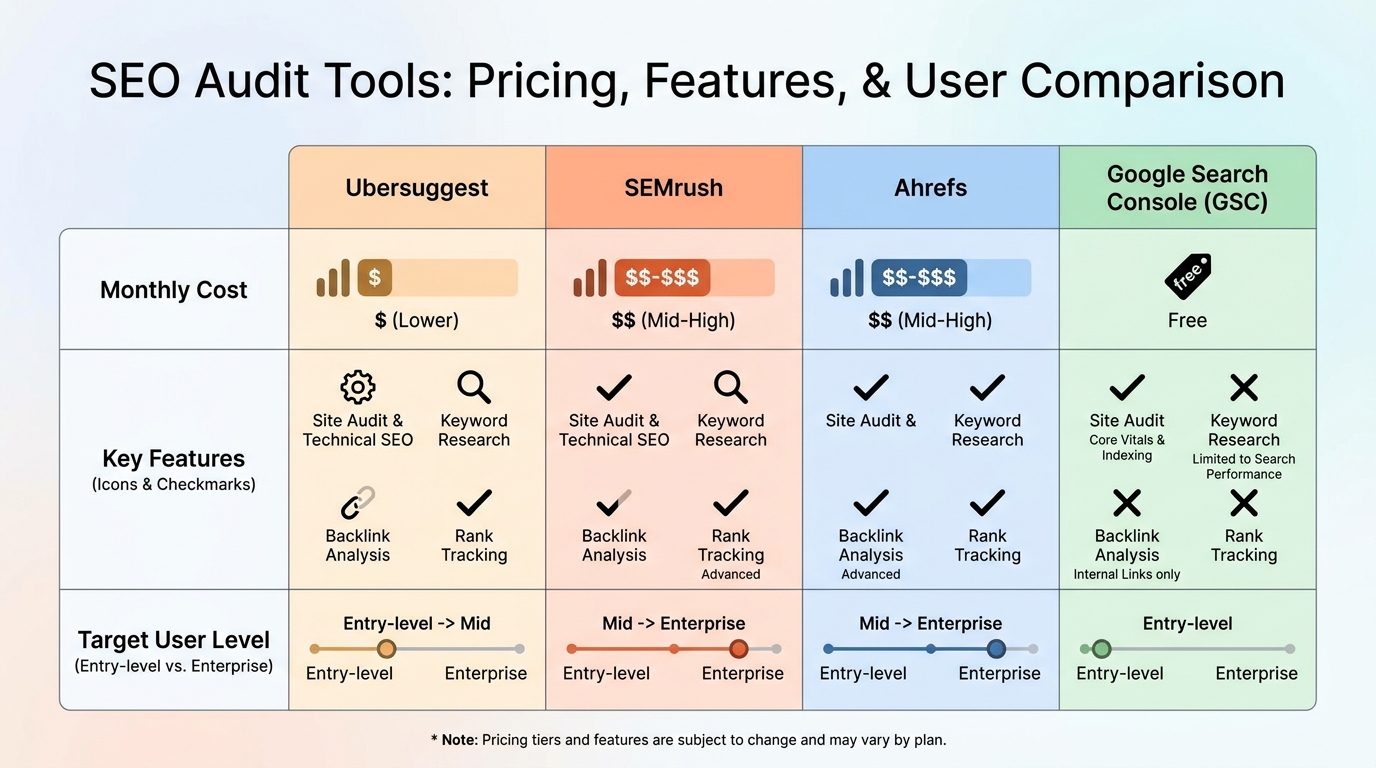
What are SEO audit tools and why do I need them?
SEO audit tools are software platforms that analyze your website's search engine optimization performance, identifying technical issues, content gaps, and ranking opportunities. They crawl your site like search engines do, checking factors like page speed, broken links, meta tags, and mobile-friendliness. Businesses need these tools to maintain healthy websites, improve search rankings, and grow organic traffic by fixing problems that prevent visibility in search results.
How much do professional SEO audit tools cost?
Professional SEO audit tools typically range from $50 to $500 per month, depending on features and site size. Entry-level tools like Ubersuggest start around $29/month, while enterprise solutions like SEMrush and Ahrefs cost $99-$499 monthly. Some platforms offer free basic audits with limited features. Google Search Console provides free webmaster tools, though paid solutions offer more comprehensive analysis, automation, and actionable insights for serious SEO optimization.
What features should I look for in SEO audit tools?
Essential features include technical SEO analysis (crawl errors, site speed, mobile optimization), keyword research capabilities, backlink analysis, competitor tracking, and page traffic checker functionality. Look for tools offering automated reporting, content optimization suggestions, rank tracking, and integration with Google Search Console. AI-powered tools now provide intent-based keyword research and automated content recommendations, helping founders scale their SEO efforts efficiently without extensive manual work.
Can SEO audit tools help increase my website traffic?
Yes, SEO audit tools identify specific issues preventing your site from ranking higher in search results. By fixing technical errors, optimizing content for target keywords, and improving page experience, you can significantly increase organic traffic. These tools provide actionable recommendations for on-page optimization, content gaps, and link-building opportunities. Regular audits using website traffic checker features help monitor progress and adjust strategies, with most businesses seeing traffic improvements within 3-6 months.
How often should I run an SEO audit on my website?
Run comprehensive SEO audits quarterly for established websites, or monthly if you're actively growing or making frequent changes. Weekly monitoring of critical metrics through Google Search Console is recommended for all sites. After major website updates, migrations, or algorithm changes, conduct immediate audits. AI-powered SEO automation tools can perform continuous monitoring, alerting you to issues in real-time, allowing proactive optimization rather than reactive fixes.
What's the difference between free and paid SEO audit tools?
Free SEO audit tools like Google Search Console provide basic insights into indexing, mobile usability, and some technical issues, but limit data depth and historical tracking. Paid tools offer comprehensive analysis including advanced keyword research, competitor intelligence, automated reporting, backlink profiles, and unlimited crawls. They provide actionable recommendations, priority scoring for fixes, and integration capabilities. For businesses serious about SEO marketing and growth, paid tools deliver ROI through time savings and deeper insights.
Do I need technical knowledge to use SEO audit tools?
Modern SEO audit tools are designed for users of all skill levels, with intuitive dashboards and plain-language explanations. While basic understanding of SEO principles helps, most platforms provide guided recommendations and prioritized action items. AI-powered tools now offer automated solutions that handle complex tasks like keyword research and content optimization. However, implementing certain technical fixes may require developer assistance. Many SEO optimization services combine tools with expert support for non-technical founders.
Which SEO audit tools integrate with Google Search Console?
Most professional SEO audit tools integrate with Google Search Console, including SEMrush, Ahrefs, Moz Pro, Screaming Frog, and Sitebulb. These integrations combine GSC's search performance data with advanced analysis features, providing comprehensive insights into rankings, clicks, and indexing issues. Integration allows automated data syncing, unified reporting, and correlation between technical issues and traffic patterns. This combination of webmaster tools and advanced SEO marketing tools creates a powerful optimization workflow for growing organic traffic.
Understanding SEO Audit Tools: Your Gateway to Better Search Rankings 🚀
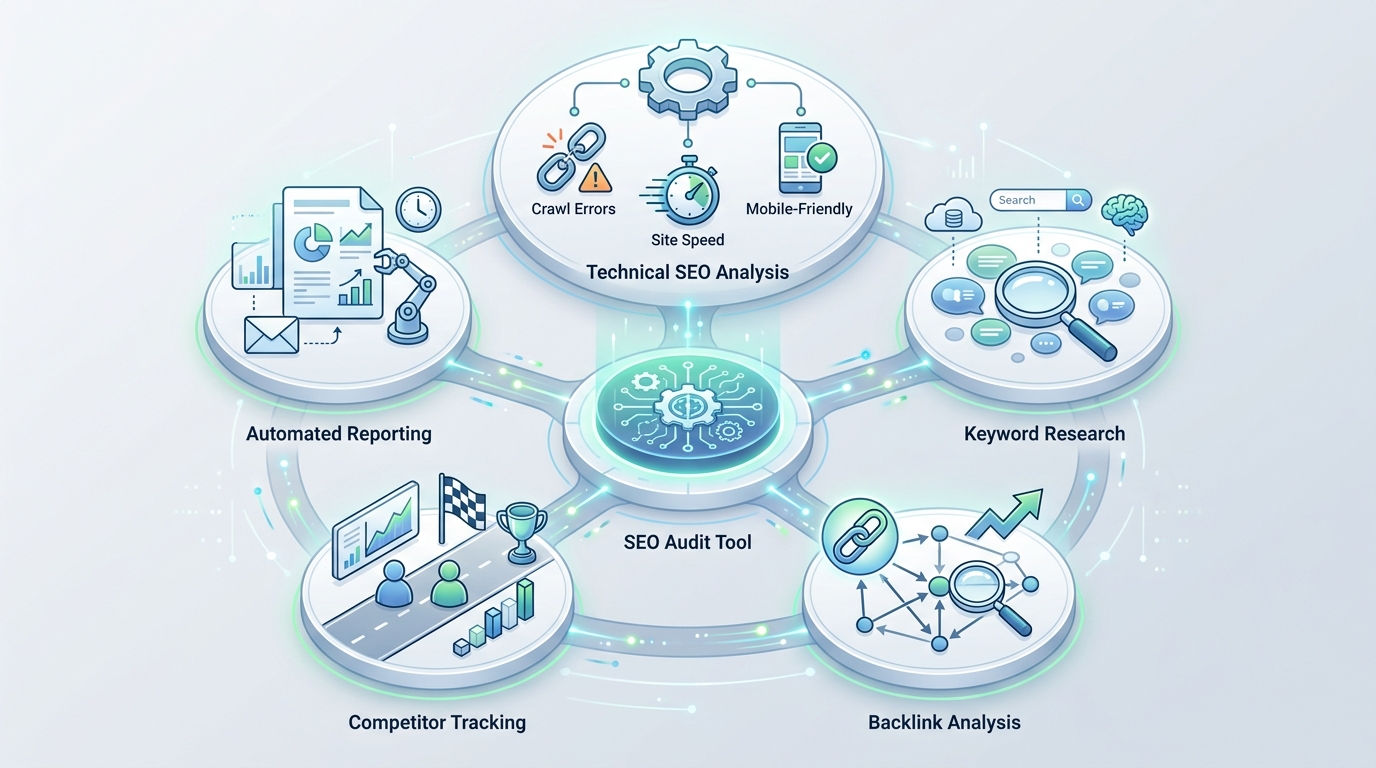
In today's competitive digital landscape, seo audit tools have become indispensable for businesses seeking to improve their online visibility and search engine rankings. These powerful platforms help identify technical issues, content gaps, and optimization opportunities that can make or break your SEO strategy. Whether you're a founder looking to scale organic traffic or an SEO professional managing multiple client sites, understanding how to leverage these tools effectively is crucial.
SEO audit tools provide comprehensive insights into your website's health, performance metrics, and competitive positioning. They analyze everything from site structure and page speed to backlink profiles and keyword rankings, offering actionable recommendations that drive measurable results.
The right audit tool can transform your approach to seo engine optimization by automating time-consuming analysis tasks and revealing hidden opportunities. With the integration of AI-powered technologies, modern platforms like IntentRank are revolutionizing how businesses approach seo search optimization and content strategy.
What Are SEO Audit Tools and Why Do You Need Them? 🔍

SEO audit tools are specialized software platforms designed to crawl, analyze, and report on various aspects of your website's search engine optimization performance. They function similarly to how search engine bots crawl your site, identifying issues that could be hindering your rankings.
Core Functions of Modern SEO Audit Tools
These platforms perform multiple critical functions that manual analysis simply cannot match in terms of speed and comprehensiveness:
- Technical SEO Analysis: Identifies crawl errors, broken links, duplicate content, and site architecture issues
- On-Page Optimization: Evaluates meta tags, header structures, keyword usage, and content quality
- Performance Monitoring: Tracks page load times, mobile responsiveness, and Core Web Vitals
- Backlink Profile Assessment: Analyzes incoming links, anchor text distribution, and link quality
- Competitive Intelligence: Compares your performance against competitors to find competitor sites and benchmark success
- Keyword Rankings: Monitors position changes and identifies new ranking opportunities
The Business Impact of Regular SEO Audits
Regular audits using professional tools deliver tangible business outcomes. They help prevent ranking drops caused by technical issues, identify content opportunities that competitors are missing, and ensure your site meets evolving search engine requirements.
For businesses focused on seo optimization services, these tools provide the data-driven insights needed to make informed decisions. They eliminate guesswork and replace it with concrete metrics that guide strategy development and resource allocation.
Essential Features to Look for in SEO Audit Tools 💡
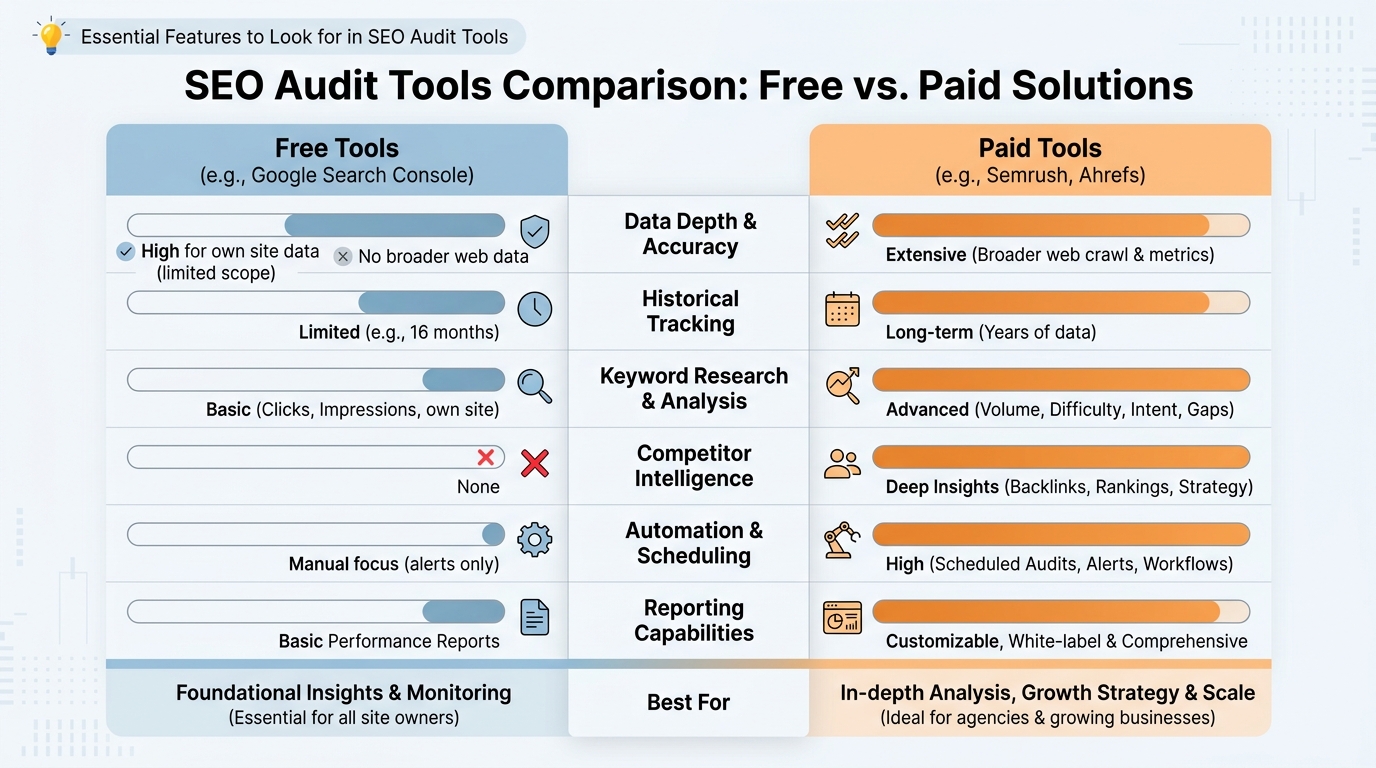
Not all audit tools are created equal. The most effective platforms combine comprehensive analysis capabilities with user-friendly interfaces and actionable reporting. Understanding which features matter most helps you select the right tool for your specific needs.
Technical Crawling and Site Health Analysis
The foundation of any quality audit tool is its ability to thoroughly crawl your website and identify technical issues. Look for platforms that can detect:
| Feature Category | Key Capabilities | Business Value |
|---|---|---|
| Crawl Efficiency | Fast, comprehensive site crawling with customizable parameters | Saves time and identifies issues quickly |
| Error Detection | 404 errors, redirect chains, server errors, canonical issues | Prevents ranking penalties and improves user experience |
| Mobile Optimization | Mobile-first indexing compatibility, responsive design checks | Captures mobile search traffic effectively |
| Security Analysis | HTTPS implementation, mixed content warnings | Builds user trust and meets search engine requirements |
Integration with Google Search Console and Webmaster Tools
The best seo marketing tools integrate seamlessly with webmaster tools google search console to provide a complete picture of your site's performance. This integration allows you to:
- Access real search query data and click-through rates directly within your audit platform
- Identify indexing issues flagged by Google before they impact rankings
- Monitor manual actions and security issues in real-time
- Analyze Core Web Vitals metrics alongside other SEO factors
Tools that function as a comprehensive page traffic checker and website traffic checker provide invaluable insights into how visitors interact with your site and which pages drive the most organic traffic.
Keyword Research and Content Optimization
Advanced audit tools go beyond technical analysis to help optimize your content strategy. Features like search intent analysis and long tail keyword generation enable you to create content that matches user needs.
Look for platforms that offer:
- Keyword Gap Analysis: Identifies terms your competitors rank for that you don't
- Content Quality Assessment: Evaluates readability, depth, and relevance
- SERP Feature Opportunities: Highlights chances to capture featured snippets and other rich results
- Meta Tag Optimization: Tools like meta description generators streamline on-page optimization
Top SEO Audit Tools for Different Business Needs 🛠️
The market offers numerous audit solutions, each with unique strengths suited to different business contexts. Understanding these differences helps you select the platform that aligns with your goals and budget.
Enterprise-Level Solutions
Large organizations with complex websites and multiple domains require robust platforms capable of handling massive data volumes. Enterprise SEO companies typically leverage tools that offer:
- Unlimited or high-volume crawling capabilities
- Advanced reporting and white-label options
- API access for custom integrations
- Multi-user collaboration features with role-based permissions
- Dedicated account management and support
Small Business and Startup Solutions
Founders and small teams need seo optimization service tools that deliver maximum value without overwhelming complexity or enterprise pricing. Key considerations include:
| Consideration | What to Look For | Why It Matters |
|---|---|---|
| Ease of Use | Intuitive interface with clear recommendations | Enables quick action without extensive training |
| Affordability | Transparent pricing with scalable plans | Fits startup budgets while allowing growth |
| Automation | Scheduled audits and automated alerts | Saves time for small teams wearing multiple hats |
| Educational Resources | Guides, tutorials, and support documentation | Helps teams learn SEO best practices |
AI-Powered Automation Tools
The latest generation of AI search engine optimization tools combines traditional audit capabilities with machine learning and automation. These platforms can:
- Automatically generate optimization recommendations based on your specific industry and competition
- Predict the impact of changes before implementation
- Create optimized content briefs and outlines
- Monitor rankings and adjust strategies in real-time
Platforms like IntentRank exemplify this new category by automating keyword research, content creation, and optimization workflows that traditionally required hours of manual work.
How to Conduct a Comprehensive SEO Audit 📊
Having the right tools is only half the battle—knowing how to use them effectively makes the difference between superficial analysis and actionable insights. A systematic approach ensures you don't miss critical issues.
Step 1: Technical Foundation Assessment
Begin with a thorough technical crawl to identify fundamental issues that could be blocking search engines or harming user experience:
- Crawlability Check: Verify that search engines can access and index all important pages
- Site Speed Analysis: Measure page load times and identify optimization opportunities
- Mobile Compatibility: Ensure responsive design and mobile-first indexing compliance
- Security Verification: Confirm HTTPS implementation across all pages
- XML Sitemap Validation: Check that sitemaps are properly formatted and submitted
Step 2: On-Page SEO Evaluation
After addressing technical issues, focus on optimizing individual pages for target keywords and user intent. This includes analyzing:
- Title Tags and Meta Descriptions: Use tools like the SEO title generator to create compelling, keyword-optimized titles
- Header Structure: Ensure logical H1-H6 hierarchy that supports content organization
- Content Quality: Evaluate depth, relevance, readability, and keyword integration
- Internal Linking: Assess link structure and anchor text distribution
- Image Optimization: Check alt text, file sizes, and format choices
Step 3: Content Gap and Opportunity Analysis
Identify areas where competitors are outranking you and discover new keyword opportunities. This phase of search engine marketing analysis reveals where to focus content creation efforts:
| Analysis Type | What to Examine | Action Items |
|---|---|---|
| Keyword Gaps | Terms competitors rank for that you don't | Create targeted content for high-value gaps |
| Content Depth | Comprehensive coverage vs. thin content | Expand or consolidate pages as needed |
| Search Intent Match | Alignment between content and user needs | Optimize existing pages or create new content |
| Featured Snippet Opportunities | Queries where snippets appear but you don't own them | Structure content to capture rich results |
Step 4: Backlink Profile Review
Analyze your link portfolio to identify toxic links, lost opportunities, and potential partnership targets. Quality backlinks remain a critical ranking factor in seo engine optimization.
Step 5: Competitive Benchmarking
Understanding how you stack up against competitors provides context for your performance metrics. Use your audit tool to identify and analyze competitor sites in your niche, examining their:
- Domain authority and backlink profiles
- Top-performing content and keywords
- Technical implementation and site structure
- Content update frequency and quality
Interpreting Audit Results and Prioritizing Actions ✅
A comprehensive audit typically reveals dozens or even hundreds of issues. The key to success lies in prioritizing fixes based on potential impact and implementation effort.
The Impact vs. Effort Matrix
Categorize identified issues using a simple framework that helps you focus on high-value activities first:
- Quick Wins (High Impact, Low Effort): Fix broken links, optimize meta descriptions, implement schema markup
- Major Projects (High Impact, High Effort): Site migrations, comprehensive content overhauls, technical infrastructure improvements
- Fill-ins (Low Impact, Low Effort): Minor content updates, image optimization, small UI improvements
- Time Sinks (Low Impact, High Effort): Generally avoid unless strategic reasons exist
Creating an Action Plan
Transform audit findings into a structured implementation roadmap that your team can execute. Include:
- Critical Issues: Technical problems that block indexing or severely harm user experience
- High-Priority Optimizations: Changes likely to drive measurable ranking improvements
- Content Opportunities: New pages or updates targeting high-value keywords
- Long-term Improvements: Strategic initiatives that build competitive advantages
For teams focused on forecasting SEO traffic and measuring ROI, establishing baseline metrics before implementing changes is crucial for demonstrating impact.
Local SEO Audits: Special Considerations 📍
Businesses serving local markets require specialized audit approaches that address location-based ranking factors. Local SEO audit tools focus on different metrics than traditional SEO platforms.
Key Local SEO Audit Elements
When auditing for local search performance, pay special attention to:
- Google Business Profile Optimization: Completeness, accuracy, and engagement metrics
- NAP Consistency: Name, address, and phone number uniformity across all citations
- Local Keywords: Integration of location-based search terms in content and metadata
- Review Management: Quantity, quality, and recency of customer reviews
- Local Link Building: Citations from local directories and community websites
- Location Pages: Dedicated pages for each service area with unique content
Businesses seeking SEO services in specific regions should ensure their audit tools can effectively evaluate these local ranking factors.
Integrating SEO Audits into Your Marketing Strategy 🎯
The most successful businesses don't treat SEO audits as one-time events but rather as ongoing components of their digital marketing ecosystem. Integration with broader marketing efforts amplifies results.
Connecting Audit Insights to Content Strategy
Use audit findings to inform your content calendar and creation priorities. When your audit reveals keyword opportunities or content gaps, transform these insights into actionable content briefs.
Modern platforms streamline this process by automatically generating optimization recommendations. For example, using intent-based analysis helps ensure every piece of content you create addresses specific user needs.
Aligning with Broader Digital Marketing Initiatives
SEO doesn't exist in isolation. Coordinate audit findings with other marketing channels:
| Marketing Channel | SEO Audit Integration | Synergy Benefits |
|---|---|---|
| Content Marketing | Use keyword research to guide topic selection | Creates content that ranks and converts |
| Social Media | Promote high-performing content identified in audits | Amplifies reach and builds backlinks |
| Paid Advertising | Target keywords where organic rankings are weak | Maintains visibility while building organic presence |
| Email Marketing | Share optimized content with subscribers | Drives traffic signals that support rankings |
For comprehensive support, partnering with an online marketing company that understands both SEO and broader digital strategy can accelerate results.
Measuring Audit Success and ROI 📈
Implementing audit recommendations without measuring results leaves you guessing about effectiveness. Establish clear metrics and tracking mechanisms to quantify impact.
Key Performance Indicators to Monitor
Track these metrics before and after implementing audit recommendations to demonstrate value:
- Organic Traffic Growth: Overall visitors from search engines using a reliable website traffic checker
- Keyword Rankings: Position improvements for target terms
- Conversion Rates: How well organic traffic converts to leads or sales
- Technical Health Score: Overall site health improvements over time
- Page Speed Metrics: Load time reductions and Core Web Vitals improvements
- Indexed Pages: Growth in pages successfully indexed by search engines
Setting Realistic Expectations
SEO improvements typically require 3-6 months to show significant results. Set appropriate expectations with stakeholders about timelines while demonstrating progress through intermediate metrics like technical issue resolution and content publication rates.
Common SEO Audit Mistakes to Avoid ⚠️
Even with powerful audit tools, certain pitfalls can undermine your optimization efforts. Awareness of these common mistakes helps you avoid wasted time and resources.
Analysis Paralysis
The most dangerous mistake is conducting extensive audits without taking action. Tools can identify hundreds of issues, but perfection isn't required. Focus on implementing high-impact changes rather than fixing every minor issue.
Ignoring User Experience
Technical SEO matters, but search engines ultimately reward sites that serve users well. Don't optimize solely for bots—ensure changes improve actual user experience, engagement, and conversion rates.
Neglecting Mobile Optimization
With mobile-first indexing now standard, failing to prioritize mobile experience in audits is a critical oversight. Always test and optimize for mobile users first.
Overlooking Search Intent
Ranking for keywords that don't match user intent wastes resources. Use tools that analyze search intent to ensure your content satisfies what users actually want when they search.
Inconsistent Monitoring
One-time audits provide snapshots, but SEO requires ongoing attention. Schedule regular audits—monthly for active sites, quarterly at minimum—to catch issues before they impact rankings.
The Future of SEO Audit Tools: AI and Automation 🤖
The evolution of seo marketing tools continues accelerating as artificial intelligence and machine learning capabilities mature. Understanding these trends helps you prepare for the next generation of optimization.
Predictive Analytics and Forecasting
Advanced platforms now use historical data and machine learning models to predict how changes will impact rankings and traffic. This capability transforms SEO from reactive to proactive, allowing you to make data-driven decisions about resource allocation.
Automated Content Optimization
AI-powered tools can now analyze top-ranking content and automatically generate optimization recommendations or even create content briefs. This automation dramatically reduces the time required to develop comprehensive seo search optimization strategies.
Real-Time Monitoring and Alerts
Rather than waiting for scheduled audits, modern platforms monitor your site continuously, alerting you immediately when issues arise. This proactive approach prevents small problems from becoming major ranking disasters.
Intent-Based Optimization
The next frontier in SEO focuses on understanding and satisfying user intent rather than simply targeting keywords. Tools that leverage natural language processing can analyze search intent at scale, ensuring every page you create addresses specific user needs.
Platforms like IntentRank represent this evolution, combining comprehensive auditing with AI-powered automation that helps founders and marketing teams scale their organic traffic efficiently.
Choosing the Right SEO Audit Tool for Your Business 🎯
With dozens of audit platforms available, selecting the right one requires careful consideration of your specific needs, budget, and technical capabilities.
Questions to Ask Before Choosing
Evaluate potential tools based on these critical questions:
- What's your primary goal? Technical fixes, content optimization, or competitive analysis?
- How large is your website? Ensure the tool can handle your page count efficiently
- What's your technical expertise? Some tools require more SEO knowledge than others
- What's your budget? Balance cost against features and potential ROI
- Do you need automation? Consider how much time you can dedicate to manual analysis
- What integrations matter? Ensure compatibility with your existing marketing stack
Trial Periods and Testing
Most quality audit tools offer free trials. Use these periods to:
- Run a complete audit of your site and evaluate the insights provided
- Test the user interface and reporting capabilities
- Assess customer support responsiveness and quality
- Compare recommendations across multiple tools
- Verify that the tool addresses your specific pain points
Take Your SEO to the Next Level with Automated Auditing 🚀
Mastering seo audit tools is essential for any business serious about organic growth. These platforms transform complex technical analysis into actionable insights that drive measurable improvements in rankings, traffic, and conversions.
The key to success lies not just in choosing the right tool, but in establishing systematic processes for conducting audits, prioritizing fixes, and measuring results. As AI and automation continue advancing, the gap between businesses that leverage these technologies and those that don't will only widen.
Whether you're a founder seeking to scale organic traffic, an SEO professional managing multiple clients, or a marketing team looking to optimize your digital presence, investing in quality audit tools and developing expertise in their use pays dividends for years to come.
Ready to automate your SEO audits and accelerate your organic growth? Visit IntentRank to discover how AI-powered SEO automation can transform your content strategy, streamline keyword research, and help you rank faster with less manual effort. Stop spending hours on tedious audits and start focusing on strategic growth that drives real business results. 💪
Article created using IntentRank


