SEO KPI Tracking: Metrics That Drive Organic Growth

TL;DR: KPI for SEO are measurable metrics that track search engine optimization performance, including organic traffic, keyword rankings, click-through rates, conversion rates, bounce rates, and backlink quality. These indicators help businesses measure ROI, identify optimization opportunities, and make data-driven decisions to improve search visibility and drive sustainable organic growth.
Frequently Asked Questions
What are the most important KPIs for SEO performance tracking?
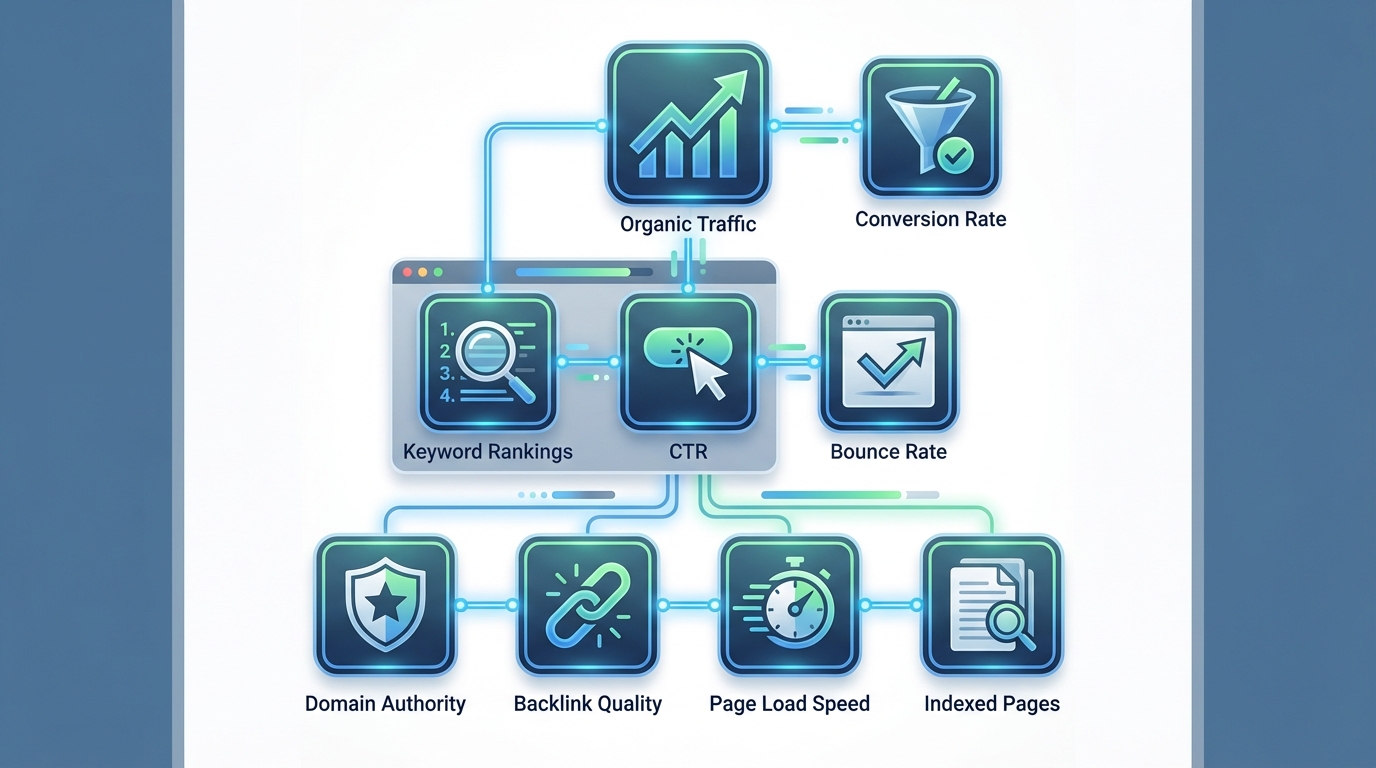
The most critical KPIs for SEO include organic traffic volume, keyword rankings, click-through rate (CTR), conversion rate, bounce rate, and domain authority. Additional metrics like backlink quality, page load speed, and indexed pages help measure technical SEO health. Using tools like Google Search Console and SEO automation platforms helps track these metrics efficiently to measure your search engine optimization success.
How do you measure SEO success with key performance indicators?
Measure SEO success by tracking organic traffic growth in Google Analytics, monitoring keyword rankings through webmaster tools Google Search Console, and analyzing conversion rates from organic channels. Establish baseline metrics, set realistic targets, and review KPIs monthly. SEO optimization services typically focus on metrics like visibility score, organic revenue, and ROI to demonstrate tangible business impact from search engine marketing efforts.
What is the difference between SEO metrics and SEO KPIs?
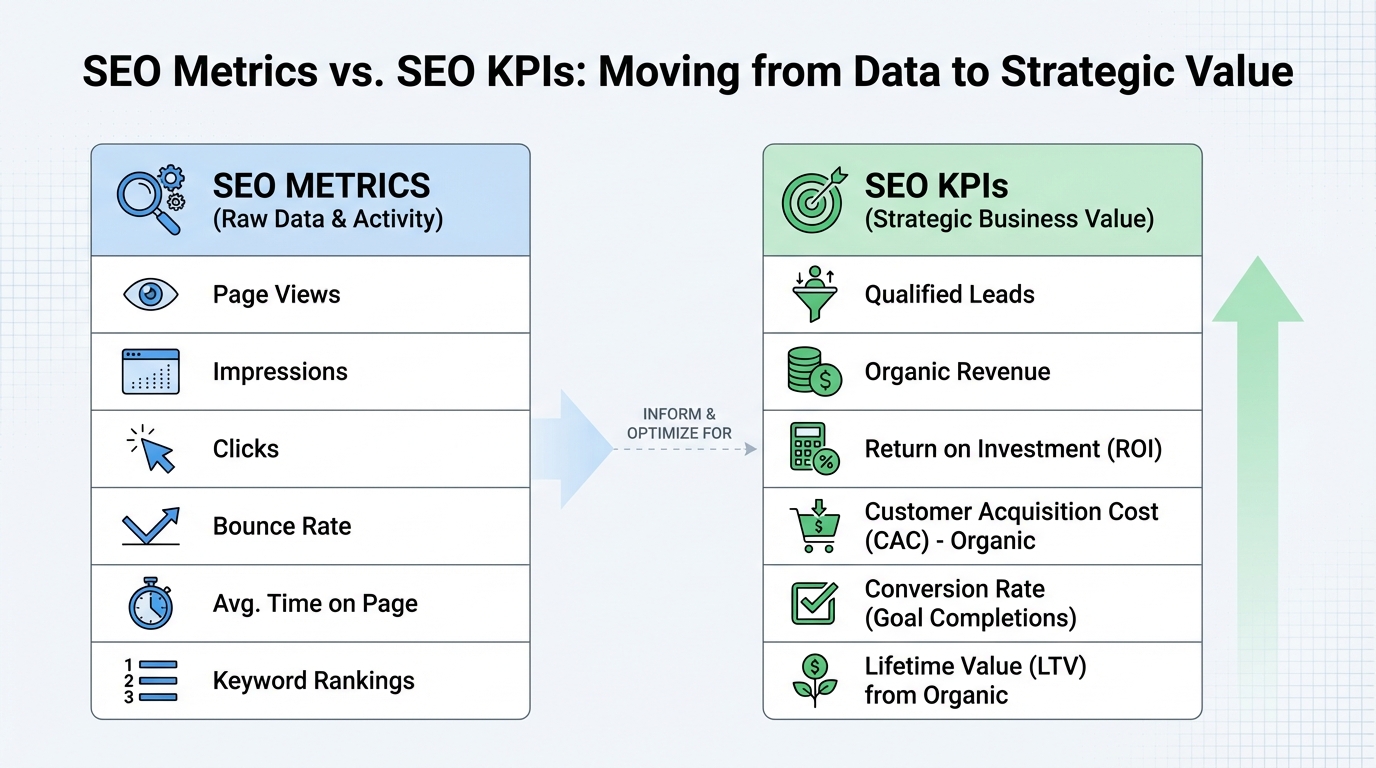
SEO metrics are all measurable data points like page views, impressions, and clicks, while KPIs for SEO are specific metrics directly tied to business goals. KPIs are strategic indicators that demonstrate ROI and success, such as qualified organic leads or revenue from organic traffic. Not all metrics are KPIs—only those aligned with your business objectives qualify as key performance indicators for effective SEO search optimization.
Which SEO marketing tools are best for tracking KPIs?
Google Search Console and Google Analytics are essential free tools for tracking SEO KPIs. Professional SEO optimization services often use platforms like SEMrush, Ahrefs, or Moz for comprehensive keyword tracking and competitor analysis. AI-powered SEO automation tools streamline KPI monitoring by aggregating data from multiple sources, providing real-time dashboards, and automating reporting for page traffic checker and website traffic checker functionality.
How often should you review your SEO KPIs?
Review core SEO KPIs weekly for quick wins like CTR and rankings, monthly for organic traffic trends and conversions, and quarterly for strategic metrics like domain authority and backlink growth. High-priority campaigns may require daily monitoring through webmaster tools Google Search Console. SEO optimization service providers typically deliver monthly reports, but automated SEO tools enable real-time tracking for faster decision-making and optimization adjustments.
What is a good organic traffic growth rate for SEO?
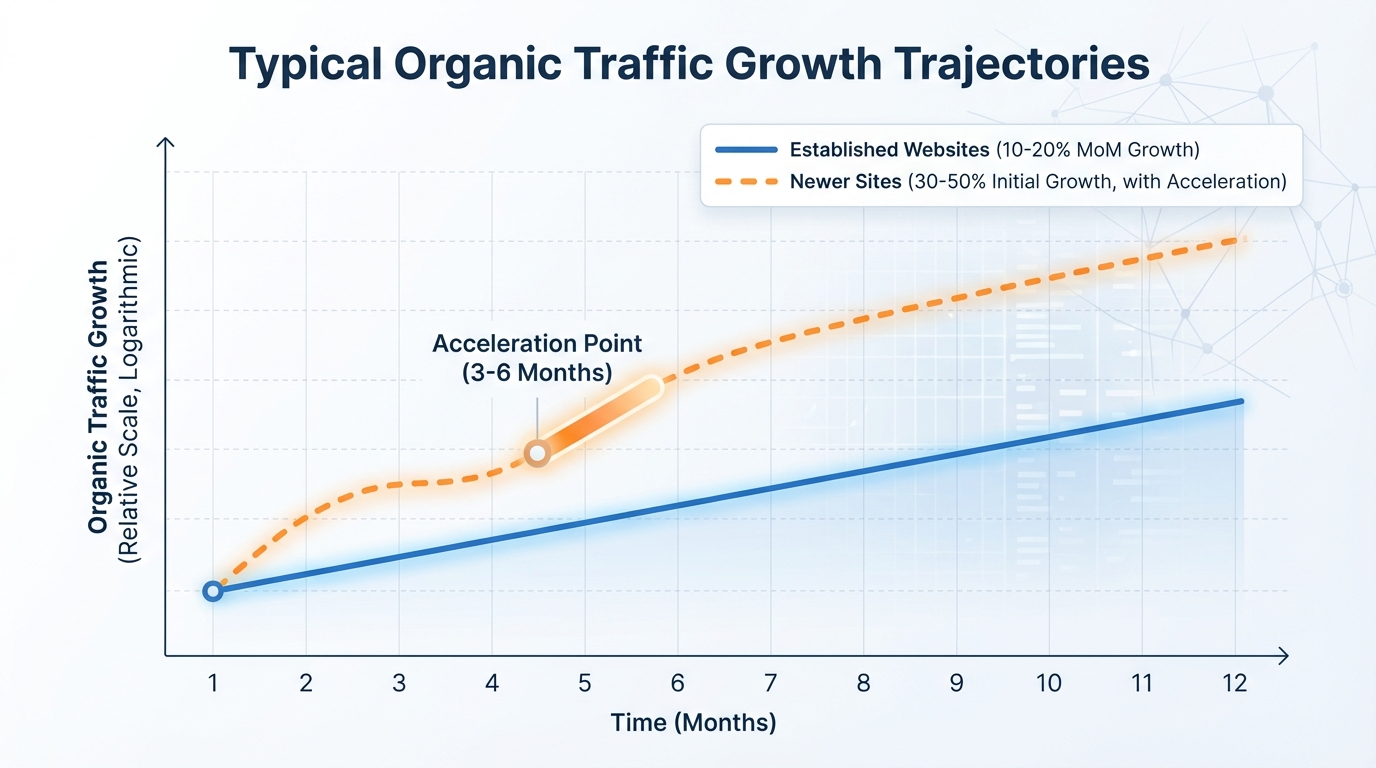
A healthy organic traffic growth rate ranges from 10-20% month-over-month for established websites, while newer sites may see 30-50% growth initially. Growth rates depend on industry competitiveness, content quality, and SEO search optimization efforts. Use a website traffic checker to benchmark against competitors. Sustainable growth through SEO engine optimization typically accelerates after 3-6 months as search engines index and rank optimized content.
How do conversion rate KPIs impact SEO optimization services?
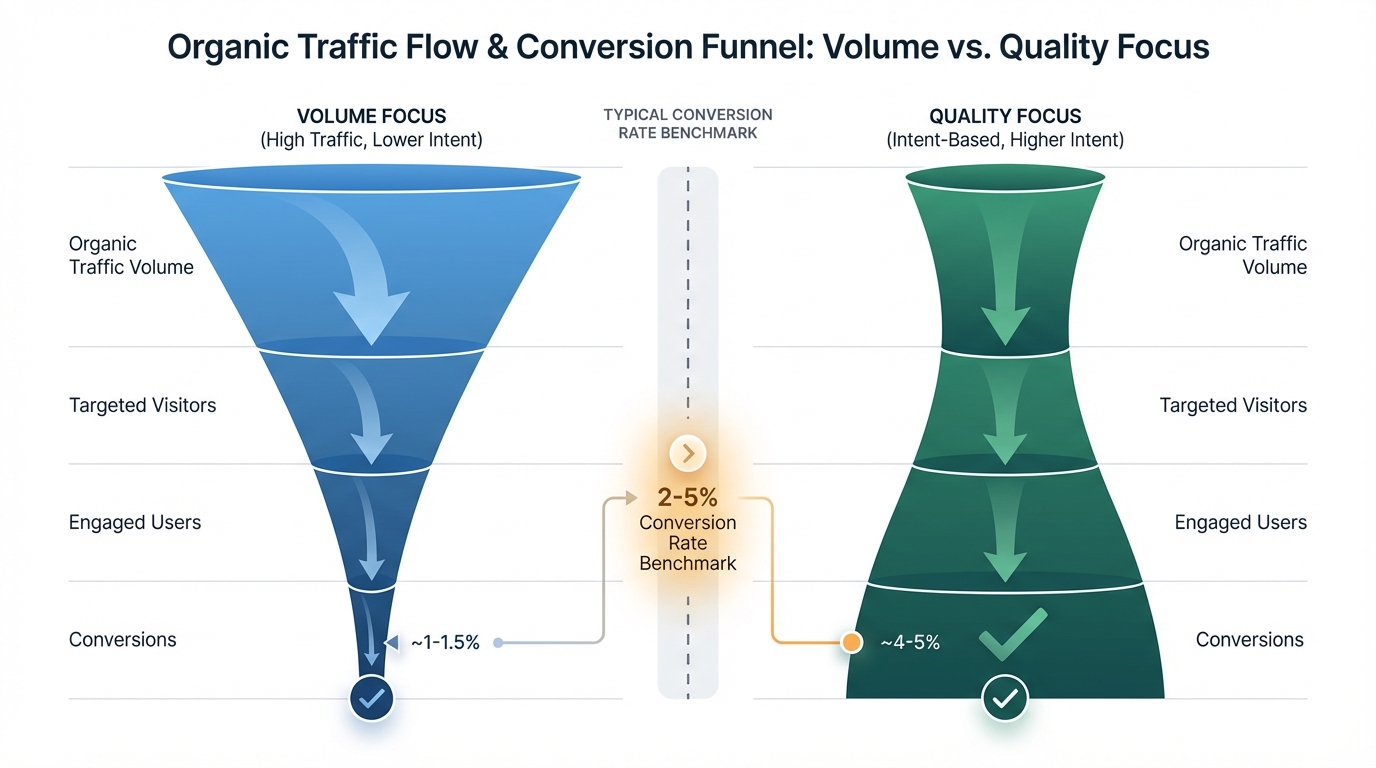
Conversion rate KPIs measure how effectively organic traffic achieves business goals like purchases, sign-ups, or leads. Quality SEO optimization services focus on intent-based keyword targeting and user experience improvements to boost conversions, not just traffic volume. A 2-5% organic conversion rate is typical for most industries. Tracking conversion KPIs ensures your SEO marketing tools and strategies deliver revenue impact, not vanity metrics.
What KPIs should founders track when using SEO automation tools?
Founders using SEO automation tools should prioritize efficiency KPIs like content production velocity, keyword ranking improvements, time-to-rank metrics, and organic traffic ROI. Track automated content performance, indexing speed, and qualified lead generation. Monitor cost-per-acquisition from organic channels compared to paid advertising. AI-powered SEO tools excel at scaling these metrics while maintaining quality, helping founders grow organic traffic without proportionally increasing manual effort or budget.
Understanding KPI for SEO: The Foundation of Search Success
Measuring success in digital marketing requires more than just gut feelings and assumptions. When it comes to KPI for SEO, you're looking at the critical metrics that determine whether your search engine optimization efforts are actually moving the needle for your business. These key performance indicators serve as your compass in the complex world of seo search optimization, guiding strategic decisions and proving ROI to stakeholders.
Search engine optimization (the seo full form) has evolved dramatically over the past decade. What once focused solely on rankings now encompasses a sophisticated ecosystem of metrics that measure user engagement, conversion potential, and business impact. Understanding which KPIs matter most can mean the difference between spinning your wheels and achieving exponential organic growth.
The modern approach to seo engine optimization demands a data-driven methodology. Whether you're a founder trying to scale organic traffic or an SEO professional managing multiple campaigns, tracking the right KPIs ensures you're investing resources where they'll generate the highest returns. Let's explore the essential metrics that separate successful SEO strategies from those that fall flat. 📊
Core Traffic Metrics: The Pulse of Your SEO Performance
Organic Traffic Volume and Growth Rate
Your organic traffic volume represents the number of visitors landing on your site through unpaid search results. This fundamental KPI provides immediate insight into your SEO visibility and reach. Using a reliable page traffic checker or website traffic checker helps you monitor these numbers consistently.
However, raw traffic numbers only tell part of the story. The growth rate—how quickly your organic traffic increases over time—reveals whether your SEO strategy is gaining momentum or stalling. A healthy SEO campaign typically shows consistent month-over-month growth, even if modest.
- Monthly organic sessions: Total visits from search engines
- Year-over-year growth: Percentage increase compared to the same period last year
- Traffic by landing page: Which pages attract the most organic visitors
- Traffic by device: Desktop vs. mobile search performance
Organic Traffic Quality and Engagement
Not all traffic carries equal value. High-quality organic traffic consists of visitors who match your target audience profile and demonstrate genuine interest in your content or offerings. Tools like webmaster tools google search console provide invaluable data about who's finding your site and how they interact with it.
Engagement metrics reveal whether your content resonates with visitors. Low engagement often indicates a mismatch between search intent and page content—a critical issue that requires immediate attention.
| Engagement Metric | What It Measures | Healthy Benchmark |
|---|---|---|
| Bounce Rate | Percentage of single-page sessions | 40-60% (varies by industry) |
| Average Session Duration | Time spent on site per visit | 2-3 minutes minimum |
| Pages Per Session | Number of pages viewed per visit | 2+ pages |
| Return Visitor Rate | Percentage of repeat visitors | 30-50% |
Keyword Performance Metrics That Drive Rankings
Keyword Rankings and Visibility
Tracking where your pages rank for target keywords remains a cornerstone KPI for SEO success. While rankings alone don't guarantee traffic or conversions, they provide crucial insights into your competitive position and content relevance. Modern seo marketing tools offer sophisticated ranking tracking across multiple search engines and locations.
Focus on tracking both primary money keywords and long-tail variations. The latter often convert better despite lower search volumes, making them valuable targets for seo optimization services strategies.
- Average ranking position: Where your site appears in search results
- Ranking distribution: Percentage of keywords in top 3, top 10, and top 20 positions
- Ranking volatility: How frequently positions change
- Featured snippet ownership: Position zero rankings you've captured
Search Impression Share and Click-Through Rate
Impressions represent how often your pages appear in search results, while click-through rate (CTR) measures how frequently searchers actually click on your listings. These metrics, easily accessible through webmaster tools google search console, reveal both visibility and appeal.
A high impression count with low CTR suggests your pages rank well but fail to attract clicks—often due to weak title tags, meta descriptions, or SERP competition. Conversely, low impressions indicate visibility problems that require deeper seo engine optimization work.
Keyword Difficulty vs. Opportunity Score
Understanding which keywords offer the best return on investment requires balancing difficulty against potential value. This strategic approach helps prioritize your seo optimization service efforts for maximum impact.
| Keyword Type | Difficulty Level | Opportunity Score | Priority |
|---|---|---|---|
| Low-competition long-tail | Low (0-30) | High | Quick wins |
| Mid-competition commercial | Medium (31-60) | Medium-High | Strategic targets |
| High-competition head terms | High (61-100) | Variable | Long-term goals |
| Branded keywords | Low | High | Protect and dominate |
Technical SEO KPIs: The Infrastructure of Success
Site Speed and Core Web Vitals
Page speed directly impacts both user experience and search rankings. Google's Core Web Vitals—Largest Contentful Paint (LCP), First Input Delay (FID), and Cumulative Layout Shift (CLS)—have become essential KPIs for any serious seo search optimization strategy. ⚡
Sites that load slowly hemorrhage both traffic and conversions. Research consistently shows that even one-second delays in page load time can decrease conversions by 7% or more.
- Largest Contentful Paint (LCP): Should occur within 2.5 seconds
- First Input Delay (FID): Should be less than 100 milliseconds
- Cumulative Layout Shift (CLS): Should be less than 0.1
- Time to First Byte (TTFB): Server response time metric
Crawlability and Indexation Metrics
If search engines can't crawl and index your pages, you won't rank—period. Monitoring crawl errors, index coverage, and sitemap health through webmaster tools google search console ensures search engines can access and understand your content properly.
Regular technical audits using professional seo marketing tools help identify and resolve issues before they impact rankings. These tools can uncover problems like broken links, redirect chains, duplicate content, and crawl budget waste.
| Technical Metric | What to Monitor | Action Threshold |
|---|---|---|
| Crawl Errors | 4xx and 5xx errors | Fix immediately |
| Index Coverage | Valid vs. excluded pages | 90%+ valid coverage |
| Mobile Usability | Mobile-friendly issues | Zero errors |
| HTTPS Status | Secure page percentage | 100% HTTPS |
Site Architecture and Internal Linking
A well-structured site architecture helps both users and search engines navigate your content efficiently. Internal linking distributes page authority throughout your site and establishes topical relevance—critical factors for modern seo engine optimization.
Monitor metrics like average click depth (how many clicks from homepage to reach a page), orphaned pages (pages with no internal links), and internal link distribution to ensure optimal site structure.
Conversion and Revenue KPIs for SEO ROI
Organic Conversion Rate and Goal Completions
Traffic without conversions represents wasted opportunity. Your organic conversion rate—the percentage of organic visitors who complete desired actions—directly measures SEO's business impact. This metric transforms seo optimization services from a cost center into a revenue driver. 💰
Different goals require different conversion tracking approaches. E-commerce sites track transactions and revenue, while B2B companies might focus on lead form submissions, demo requests, or content downloads.
- Macro conversions: Primary business goals (purchases, signups)
- Micro conversions: Secondary engagement actions (newsletter signups, video views)
- Assisted conversions: Organic sessions that contribute to multi-touch conversions
- Conversion rate by landing page: Which pages convert best
Revenue Attribution and Customer Lifetime Value
Understanding the revenue generated by organic search validates your SEO investment. Track both direct revenue (from immediate conversions) and assisted revenue (from multi-channel conversion paths where organic played a role).
Customer lifetime value (CLV) from organic channels often exceeds that from paid channels because organic visitors tend to be further along in their buyer journey and demonstrate higher purchase intent.
| Revenue Metric | Calculation Method | Strategic Value |
|---|---|---|
| Direct Organic Revenue | Sales from last-click organic | Immediate ROI measurement |
| Assisted Organic Revenue | Multi-touch attribution | Full channel contribution |
| Average Order Value | Revenue ÷ transactions | Quality of organic traffic |
| Customer Acquisition Cost | SEO investment ÷ new customers | Efficiency benchmark |
Lead Quality and Sales Qualification Rates
For B2B companies and service providers, lead quality matters more than quantity. Track how organic leads progress through your sales funnel compared to other channels. High-quality leads from search engine marketing efforts typically show better qualification rates and shorter sales cycles.
Collaborate with your sales team to establish feedback loops that identify which keywords, pages, and content types generate the most qualified prospects. This intelligence informs future content strategy and keyword targeting.
Backlink Profile KPIs: Authority and Trust Signals
Domain Authority and Page Authority Metrics
Your backlink profile remains one of Google's top ranking factors. Domain authority (DA) and page authority (PA) metrics, while not official Google metrics, provide useful benchmarks for comparing your site's link strength against competitors.
Quality trumps quantity in link building. A single link from a highly authoritative, relevant site carries more weight than dozens of low-quality links. Professional seo optimization service providers focus on earning links from reputable sources within your industry.
- Total referring domains: Number of unique sites linking to you
- Domain authority score: Overall site authority (0-100 scale)
- Link velocity: Rate of new link acquisition
- Anchor text distribution: Variety and relevance of link anchor text
Link Quality and Toxicity Monitoring
Not all backlinks benefit your SEO. Toxic links from spammy or irrelevant sites can trigger Google penalties and damage rankings. Regular link audits identify problematic links that require disavowal.
Monitor your link profile for sudden spikes in low-quality links, which might indicate negative SEO attacks. Tools integrated with seo marketing tools platforms help automate this monitoring process.
Competitive Link Gap Analysis
Understanding where your competitors earn links reveals opportunities for your own link building campaigns. Competitive link gap analysis identifies sites that link to competitors but not to you—prime targets for outreach.
This strategic approach, often part of comprehensive seo optimization services, helps you systematically close the authority gap between your site and established competitors.
Content Performance KPIs That Matter
Content Engagement and Depth Metrics
Creating content is easy; creating content that resonates with your audience and search engines requires strategic measurement. Content engagement KPIs reveal which topics, formats, and approaches deliver the best results for your seo search optimization efforts. 📝
Beyond basic metrics like page views, analyze scroll depth (how far users read), time on page (actual engagement duration), and social shares (content amplification). These signals indicate content quality to both users and search algorithms.
- Average scroll depth: Percentage of page viewed
- Content consumption rate: Time spent relative to content length
- Social sharing frequency: Amplification across platforms
- Comments and interactions: User engagement indicators
Content Freshness and Update Frequency
Google favors fresh, regularly updated content for many query types. Track when your top-performing pages were last updated and monitor whether refreshing older content improves rankings and traffic.
Establishing a content maintenance schedule ensures your best assets remain current and competitive. This proactive approach often delivers better ROI than constantly creating new content.
Topic Authority and Topical Coverage
Modern SEO rewards comprehensive topic coverage rather than isolated keyword targeting. Measure your topic authority by tracking how many related keywords and subtopics you rank for within your core subject areas.
Building topic clusters—groups of interlinked content around core themes—signals expertise to search engines and improves rankings across entire topic areas. Tools like Free Search Intent Analyzer help identify gaps in your topical coverage.
Local SEO KPIs for Location-Based Businesses
Google Business Profile Metrics
For businesses serving local markets, Google Business Profile (GBP) performance represents critical KPIs. Monitor impressions, clicks, calls, direction requests, and booking actions directly from your GBP listing.
Local pack rankings—appearing in the map results for location-based searches—drive significant traffic and conversions. Track your rankings for key "near me" and location-specific queries relevant to your business.
| Local SEO Metric | What It Indicates | Optimization Focus |
|---|---|---|
| GBP Impressions | Local search visibility | Category optimization, posts |
| Direction Requests | Intent to visit | Accurate location data |
| Phone Calls | Direct engagement | Call-to-action optimization |
| Review Volume & Rating | Trust and reputation | Review generation strategy |
Local Citation Consistency and NAP Accuracy
Name, Address, Phone (NAP) consistency across online directories and citations impacts local rankings. Audit your business listings regularly to ensure information remains accurate and consistent.
Track the number of quality local citations, directory listings, and local backlinks. These signals help search engines verify your business legitimacy and local relevance.
Competitive Benchmarking KPIs
Share of Voice and Market Visibility
Your share of voice (SOV) measures what percentage of total search visibility you capture compared to competitors. This relative metric provides context for your absolute performance numbers.
Calculate SOV by comparing your keyword rankings, traffic estimates, and SERP feature ownership against your main competitors. Growing SOV indicates you're gaining ground in your market, even if absolute traffic remains modest.
- Keyword share of voice: Your rankings vs. competitors for target keywords
- Traffic share estimation: Estimated organic traffic compared to competitors
- SERP feature ownership: Featured snippets, knowledge panels, and rich results you own
- Content gap analysis: Topics competitors rank for but you don't
Competitive Content Analysis
Understanding what content performs well for competitors informs your own content strategy. Analyze which competitor pages attract the most traffic, earn the most backlinks, and rank for the most keywords.
This competitive intelligence, often gathered through advanced seo marketing tools, reveals opportunities to create superior content that captures market share from established players.
Advanced KPIs for Enterprise SEO
SEO Forecasting and Predictive Metrics
Sophisticated SEO programs use predictive analytics to forecast future performance. By analyzing historical data patterns, search trends, and competitive dynamics, you can project traffic, conversions, and revenue with reasonable accuracy.
Learn more about this strategic approach through resources on Master Forecasting SEO Traffic, which explores methodologies for predicting organic growth trajectories.
SEO Efficiency and Resource Allocation
For teams managing multiple sites or campaigns, efficiency metrics ensure optimal resource allocation. Track metrics like traffic per published page, rankings per hour invested, and conversions per dollar spent.
These productivity KPIs help identify which SEO activities deliver the highest returns, enabling smarter prioritization and budget allocation across your seo optimization services portfolio.
Brand Search Volume and Awareness
Branded search volume—how often people search for your company or product names—indicates brand awareness and marketing effectiveness. Growing branded searches suggest your overall marketing efforts are working synergistically.
Monitor both direct brand searches and branded keyword variations. Protecting and dominating these terms ensures you capture demand you've created through other marketing channels.
Setting Up Your KPI Dashboard and Reporting Framework
Choosing the Right Tools for KPI Tracking
Effective KPI monitoring requires the right technology stack. At minimum, you'll need Google Analytics for traffic and conversion tracking, webmaster tools google search console for search performance data, and a comprehensive SEO platform for rankings, backlinks, and competitive intelligence.
Modern solutions like IntentRank consolidate multiple data sources into unified dashboards, making it easier to track all your critical KPIs in one place without constantly switching between tools. 🚀
- Analytics platforms: Google Analytics, Adobe Analytics
- Search performance tools: Google Search Console, Bing Webmaster Tools
- All-in-one SEO platforms: Comprehensive tracking and automation
- Data visualization tools: Dashboards that make KPIs accessible
Creating Stakeholder-Friendly Reports
Different stakeholders care about different KPIs. Executives want revenue and ROI metrics, while marketing teams need detailed performance data. Create tiered reporting that provides appropriate detail for each audience.
Effective SEO reports tell a story with data, connecting KPI changes to specific actions and demonstrating clear cause-and-effect relationships. Avoid overwhelming stakeholders with vanity metrics that don't tie to business outcomes.
Establishing Baseline Metrics and Goal Setting
Before optimizing, establish clear baselines for all your KPIs. Document current performance across all metrics to create a starting point for measuring improvement.
Set SMART goals (Specific, Measurable, Achievable, Relevant, Time-bound) for each KPI. For example: "Increase organic traffic from 10,000 to 15,000 monthly sessions within six months" provides clearer direction than "improve SEO."
| KPI Category | Example Goal | Measurement Frequency |
|---|---|---|
| Organic Traffic | 20% quarter-over-quarter growth | Weekly |
| Keyword Rankings | 50% of targets in top 10 | Daily |
| Conversion Rate | Improve from 2% to 3% | Weekly |
| Backlink Growth | 10 quality links per month | Monthly |
Common KPI Tracking Mistakes to Avoid
Focusing on Vanity Metrics Over Business Impact
Many SEO programs track metrics that look impressive but don't drive business results. Page views, keyword rankings, and domain authority mean nothing if they don't translate into conversions and revenue.
Always connect your KPIs to business outcomes. Ask: "If this metric improves, does our business grow?" If the answer isn't clearly yes, reconsider whether it deserves prominent dashboard placement.
Ignoring Statistical Significance
Small sample sizes and short time frames produce misleading conclusions. A 50% traffic increase sounds impressive, but if it represents 10 additional visits, it's statistically insignificant and likely due to random variance.
Ensure adequate sample sizes and measurement periods before drawing conclusions. Most SEO changes require at least 30 days to show meaningful results, and some require 90+ days.
Failing to Segment Data Properly
Aggregate data hides important insights. Always segment your KPIs by relevant dimensions like device type, geographic location, traffic source, and user type (new vs. returning).
A declining overall conversion rate might mask the fact that mobile conversions are actually improving while desktop conversions are falling—insights that lead to very different optimization strategies.
Automating KPI Tracking for Scalable SEO Growth
The Case for SEO Automation
Manual KPI tracking consumes valuable time that could be spent on strategic optimization. Automation ensures consistent monitoring, immediate alerts when metrics deviate from expectations, and more time for analysis and action.
Modern seo marketing tools offer extensive automation capabilities, from scheduled reporting to anomaly detection. Platforms like Cool SEO Tool That Automates Your Content & Rankings demonstrate how automation accelerates growth while reducing manual workload.
Building Automated Alerts and Triggers
Set up automated alerts for critical KPI thresholds. For example, receive immediate notifications when organic traffic drops more than 20%, when crawl errors exceed 50, or when a top-ranking page loses position.
These early warning systems enable rapid response to issues before they significantly impact performance. Quick reaction times often mean the difference between minor blips and major traffic losses.
Integrating AI for Predictive Insights
Artificial intelligence transforms historical KPI data into actionable predictions. AI-powered platforms can forecast traffic trends, predict which content will perform best, and recommend optimization priorities based on expected impact.
Explore AI Search Engine Optimization Tools That Drive Real Traffic to understand how machine learning enhances KPI tracking and strategic decision-making in modern SEO programs.
Conclusion: Turning KPI Data Into SEO Success
Mastering KPI for SEO transforms your optimization efforts from guesswork into a data-driven science. The metrics we've explored—from organic traffic and keyword rankings to conversion rates and competitive benchmarks—provide the foundation for strategic decisions that drive real business growth.
Remember that no single KPI tells the complete story. The most successful SEO programs track a balanced scorecard of metrics across traffic, rankings, technical health, conversions, and competitive position. This holistic approach ensures you're optimizing for sustainable, long-term success rather than short-term vanity wins.
The key to effective KPI tracking lies in choosing metrics that align with your specific business goals, establishing clear baselines, and consistently measuring progress. Whether you're focused on seo search optimization for e-commerce, B2B lead generation, or local visibility, the right KPIs illuminate the path forward.
Don't let the complexity of KPI tracking slow your progress. Modern automation tools streamline measurement and reporting, freeing you to focus on strategic optimization. Visit IntentRank to discover how AI-powered SEO automation can help you track the metrics that matter most while accelerating your organic growth. Our platform combines comprehensive KPI tracking with intelligent automation, helping founders and marketing teams achieve measurable SEO results faster. 🎯
Start by identifying your top three business-critical KPIs today. Track them consistently, set ambitious but achievable goals, and watch as data-driven optimization transforms your seo engine optimization results from incremental improvements to exponential growth.
Article created using IntentRank


