Google SEO Words: How to Find & Rank for Keywords Fast

TL;DR: Google SEO words are strategic keywords and phrases that help your content rank higher in search results. These include primary keywords, long-tail variations, LSI keywords, and search intent terms. Using the right google seo words in your content, titles, meta descriptions, and headers improves visibility and drives organic traffic to your website.
Frequently Asked Questions
What are Google SEO words and why are they important?
Google SEO words, also known as keywords, are specific terms and phrases users type into search engines when looking for information. They're crucial for search engine optimization because they help Google understand your content's relevance and match it with user queries. Effective use of SEO words improves your website's visibility, drives organic traffic, and connects you with your target audience searching for your products or services.
How do I find the right SEO words for my website?
Finding the right SEO words involves using keyword research tools like Google Search Console, SEMrush, or AI-powered SEO automation platforms. Start by identifying your target audience's search intent, analyze competitor keywords, and look for terms with good search volume and manageable competition. Focus on long-tail keywords that match user intent and consider using automated keyword research tools to discover opportunities faster and scale your content strategy effectively.
What's the difference between SEO search optimization and search engine marketing?
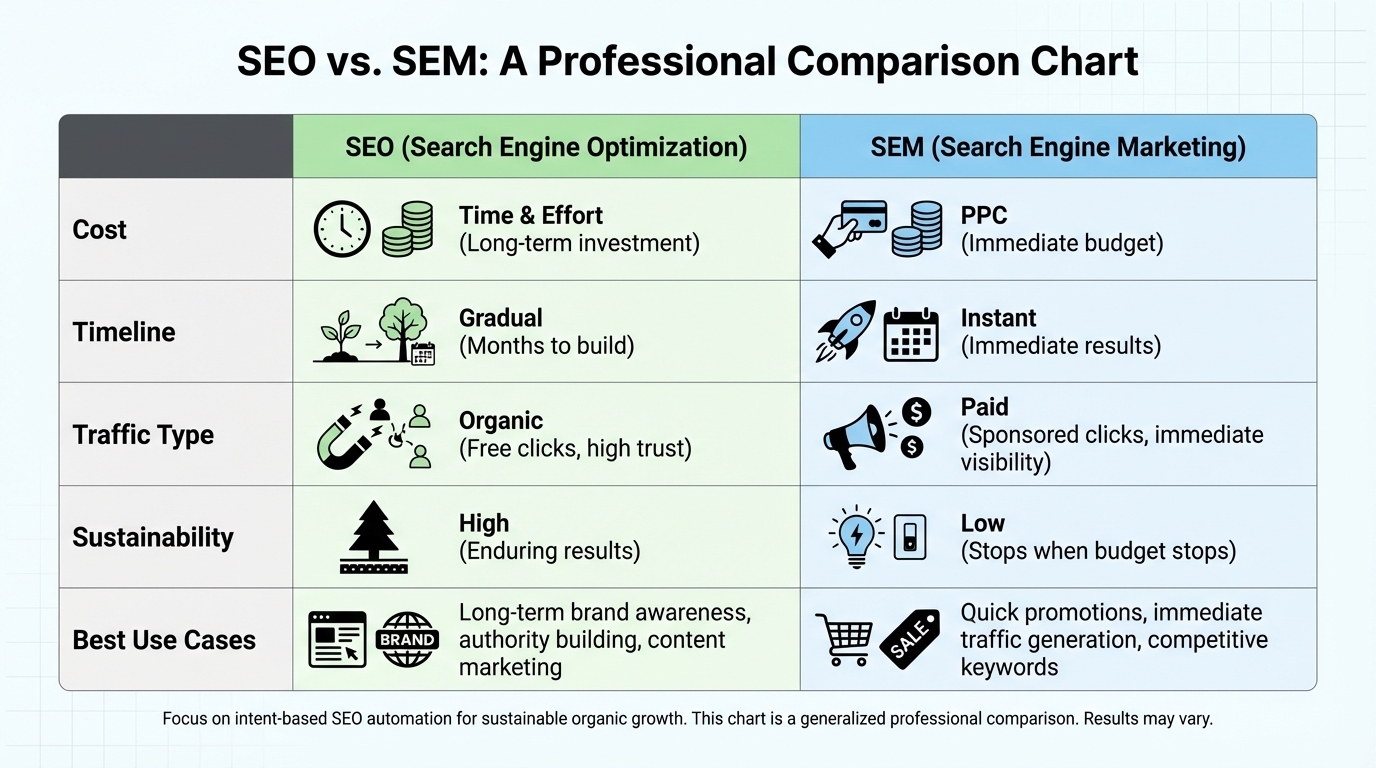
SEO search optimization focuses on improving organic rankings through unpaid strategies like content creation, keyword optimization, and technical improvements. Search engine marketing (SEM) encompasses both organic SEO and paid advertising like Google Ads. While SEO builds long-term traffic through quality content and optimization, SEM delivers immediate visibility through paid campaigns. Most successful strategies combine both approaches, using SEO for sustainable growth and SEM for quick results.
How can Google Search Console help with SEO optimization?
Google Search Console (formerly Webmaster Tools) is a free tool that provides essential data for SEO optimization. It shows which keywords drive traffic, identifies indexing issues, monitors site performance, and reveals technical problems affecting rankings. The platform helps track page traffic, analyze click-through rates, and understand how Google views your website. Regular monitoring of Search Console data enables you to refine your SEO strategy and fix issues impacting visibility.
What are the best SEO marketing tools for beginners?
Essential SEO marketing tools for beginners include Google Search Console for performance monitoring, Google Analytics as a website traffic checker, and keyword research platforms like Ubersuggest or AnswerThePublic. AI-powered SEO automation tools can simplify keyword research and content optimization for founders without technical expertise. Start with free tools to understand basics, then consider investing in comprehensive SEO optimization services or platforms that automate repetitive tasks and accelerate organic growth.
How does a page traffic checker help improve SEO performance?
A page traffic checker analyzes visitor data to reveal which pages perform well and which need improvement. It tracks metrics like pageviews, bounce rates, time on page, and traffic sources, helping you identify high-performing content and optimization opportunities. By understanding traffic patterns, you can refine your keyword strategy, improve underperforming pages, and replicate successful content. Regular traffic analysis ensures your SEO efforts align with actual user behavior and business goals.
Should I use SEO optimization services or do it myself?
The choice between SEO optimization services and DIY depends on your budget, time, and expertise. DIY SEO works for founders willing to learn and use automation tools for keyword research and content creation. Professional SEO optimization services offer expertise, faster results, and comprehensive strategies but cost more. A middle ground is using AI-powered SEO automation tools that handle technical tasks while you focus on strategy and content, making professional-level optimization accessible to non-experts.
How long does it take to see results from SEO engine optimization?
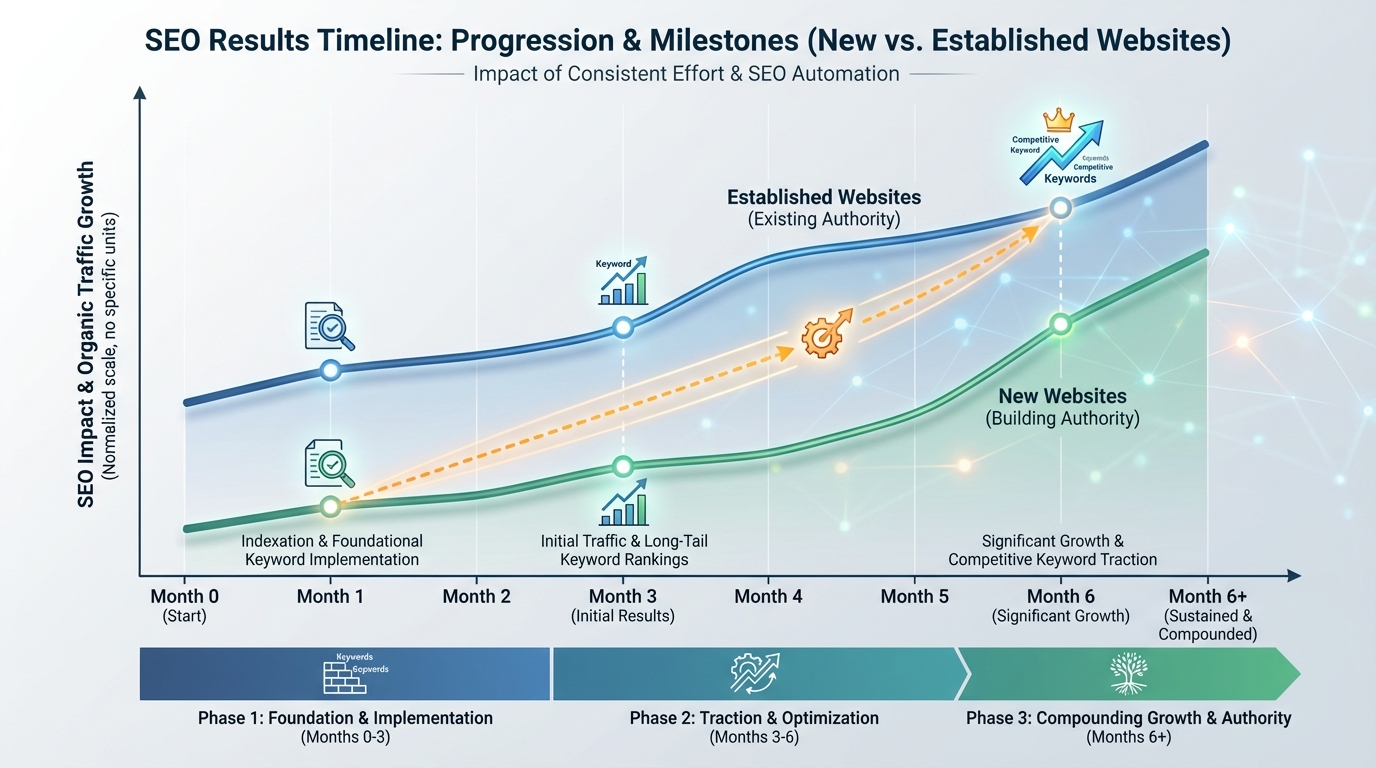
SEO engine optimization typically takes 3-6 months to show significant results, though timelines vary based on competition, website authority, and optimization quality. New websites need longer to build authority, while established sites may see improvements faster. Consistent efforts in keyword optimization, quality content creation, and technical SEO compound over time. Using SEO automation tools can accelerate the process by streamlining keyword research and content optimization, helping you rank faster with data-driven strategies.
Understanding Google SEO Words: Your Foundation for Search Success
When it comes to mastering google seo words, understanding the fundamental building blocks of search engine optimization is essential for anyone looking to increase their online visibility. These words—more commonly known as keywords—form the bridge between what users search for and the content you create to meet their needs.
Google SEO words are the specific terms and phrases that people type into search engines when looking for information, products, or services. Mastering the art of identifying, targeting, and optimizing for these keywords can transform your website's performance, driving qualified traffic and converting visitors into customers.
In today's competitive digital landscape, simply guessing which keywords to target isn't enough. You need a systematic approach that combines seo search optimization strategies with powerful seo marketing tools to identify high-value opportunities and track your progress effectively.
What Makes Google SEO Words Different from Regular Keywords? 🔍
Not all keywords are created equal when it comes to search engine optimization. Google SEO words specifically refer to terms that have been strategically selected based on search volume, competition, user intent, and relevance to your business objectives.
The Four Types of Search Intent
Understanding search intent is crucial for selecting the right Google SEO words. Every search query falls into one of four categories:
- Informational Intent: Users seeking knowledge or answers (e.g., "what is SEO" or "how to optimize content")
- Navigational Intent: Users looking for a specific website or page (e.g., "Google Search Console login")
- Commercial Intent: Users researching products or services before purchasing (e.g., "best SEO tools 2026")
- Transactional Intent: Users ready to take action or make a purchase (e.g., "buy SEO optimization service")
Using a Free Search Intent Analyzer can help you categorize keywords accurately and align your content strategy with user expectations. This approach ensures you're not just driving traffic, but attracting the right visitors who are most likely to convert.
Long-Tail vs. Short-Tail Keywords
| Characteristic | Short-Tail Keywords | Long-Tail Keywords |
|---|---|---|
| Length | 1-2 words | 3+ words |
| Search Volume | High (10K+ monthly) | Lower (100-1K monthly) |
| Competition | Very high | Low to moderate |
| Conversion Rate | Lower (2-3%) | Higher (5-10%) |
| Example | "SEO tools" | "best SEO tools for small business 2026" |
Long-tail keywords typically account for 70% of all search traffic and offer significantly better conversion rates because they capture users with specific intent. A Free Long Tail Keyword Generator can help you discover these valuable opportunities efficiently.
How to Find the Right Google SEO Words for Your Content Strategy 📊
Discovering high-performing keywords requires a combination of research tools, competitive analysis, and strategic thinking. Here's a comprehensive approach to finding Google SEO words that will drive meaningful results for your business.
Leveraging Google's Own Tools
Google provides several free resources that offer invaluable insights into how users search and what terms are trending:
- Google Search Console: This essential tool (also known as webmaster tools google search console) shows exactly which queries are already driving traffic to your site, along with impressions, clicks, and average position data
- Google Autocomplete: Start typing a query in Google's search bar to see popular related searches that users frequently perform
- Google Trends: Identify seasonal patterns, rising topics, and geographic variations in search behavior
- People Also Ask: These expandable boxes reveal related questions users commonly search for
- Related Searches: Found at the bottom of search results pages, these suggestions offer keyword expansion opportunities
By analyzing data from webmaster tools google search console, you can identify underperforming pages that rank on page 2 or 3 and optimize them to reach page 1, where the majority of clicks occur.
Understanding Keyword Metrics That Matter
When evaluating potential Google SEO words, focus on these critical metrics to make informed decisions:
| Metric | What It Measures | Ideal Range |
|---|---|---|
| Search Volume | Monthly searches for the keyword | 100-10,000 (varies by niche) |
| Keyword Difficulty | Competition level (0-100) | 0-40 for new sites |
| Cost Per Click (CPC) | Commercial value indicator | $2+ indicates high value |
| Click-Through Rate | Percentage who click results | Varies by position |
| SERP Features | Special result types present | Opportunities for visibility |
Advanced seo marketing tools can automate much of this analysis, helping you quickly identify the most promising opportunities without manual research for every potential keyword.
Competitive Keyword Analysis
One of the fastest ways to discover valuable Google SEO words is to analyze what's already working for your competitors. This approach reveals proven keywords that drive traffic in your industry.
Learning how to Find Competitor Sites and analyze their keyword strategies can uncover gaps in your own content and identify low-hanging fruit opportunities where you can outrank them with better, more comprehensive content.
- Identify your top 5-10 direct competitors who rank for your target topics
- Use SEO tools to extract their top-performing keywords
- Filter for keywords where they rank in positions 1-10
- Prioritize keywords where you have existing content that could be optimized
- Create a content plan targeting gaps where competitors are weak
Implementing Google SEO Words Effectively Across Your Website 🎯
Finding the right keywords is only half the battle. Strategic implementation across your website's pages, content, and technical elements determines whether those keywords actually drive rankings and traffic.
On-Page SEO Optimization Techniques
Proper seo engine optimization requires placing your target Google SEO words in specific locations where search engines look for relevance signals:
- Title Tags: Include your primary keyword near the beginning (use a Free SEO Title Generator for optimization)
- Meta Descriptions: Incorporate keywords naturally while compelling users to click (try a Free Meta Description Generator)
- H1 Heading: Your main page heading should feature the primary keyword
- H2-H3 Subheadings: Use variations and related keywords throughout content structure
- First 100 Words: Include your primary keyword early in the introduction
- Image Alt Text: Describe images using relevant keywords naturally
- URL Slugs: Keep URLs short and include the target keyword
- Body Content: Use keywords naturally with a density of 1-2% (avoid stuffing)
The key is natural integration—your content should read smoothly for humans while signaling relevance to search engines. Modern seo optimization services focus on semantic relevance rather than exact-match keyword repetition.
Content Optimization for Search Intent
Matching your content format and depth to search intent significantly improves your chances of ranking. Different types of queries require different content approaches:
| Search Intent | Best Content Format | Optimal Length |
|---|---|---|
| Informational | Blog posts, guides, tutorials | 1,500-2,500 words |
| Commercial | Comparison articles, reviews | 1,200-2,000 words |
| Transactional | Product/service pages, landing pages | 500-1,000 words |
| Navigational | Homepage, about pages, contact | 300-800 words |
Analyzing the current top 10 results for your target Google SEO words reveals what Google considers the most relevant content type. If all top results are listicles, your in-depth guide might struggle to rank—format matters.
Technical SEO Considerations
Beyond content optimization, technical factors influence how effectively your Google SEO words translate into rankings:
- Page Load Speed: Faster sites rank better; aim for under 3 seconds load time
- Mobile Responsiveness: Over 60% of searches occur on mobile devices
- Internal Linking: Connect related content using descriptive anchor text with keywords
- Schema Markup: Help search engines understand your content context
- XML Sitemaps: Ensure all important pages are discoverable
- HTTPS Security: SSL certificates are a confirmed ranking factor
Using a page traffic checker or website traffic checker regularly helps you monitor which pages are performing well and which need technical improvements to reach their ranking potential.
Advanced Strategies for Ranking Google SEO Words in 2026 🚀
As search algorithms become more sophisticated, advanced strategies separate websites that dominate search results from those that struggle for visibility. These techniques leverage AI, automation, and data-driven insights.
AI-Powered Keyword Research and Optimization
Modern AI Search Engine Optimization Tools have revolutionized how we identify and optimize for Google SEO words. These platforms can process massive datasets to uncover patterns human researchers might miss.
AI tools excel at:
- Identifying semantic relationships between keywords and topics
- Predicting which keywords will trend before they become competitive
- Analyzing SERP features to determine content format requirements
- Generating content briefs optimized for target keywords
- Monitoring keyword performance and suggesting optimization opportunities
Platforms like IntentRank combine AI-powered keyword research with automated content optimization, helping businesses scale their SEO efforts without proportionally increasing manual work.
Topic Clusters and Semantic SEO
Rather than targeting individual Google SEO words in isolation, the topic cluster model organizes content around core themes with interconnected supporting articles:
- Pillar Content: Comprehensive guide covering a broad topic (e.g., "Complete Guide to SEO")
- Cluster Content: Detailed articles on specific subtopics (e.g., "On-Page SEO," "Link Building," "Technical SEO")
- Internal Linking: Clusters link to the pillar; pillar links to each cluster
- Keyword Strategy: Pillar targets high-volume head terms; clusters target long-tail variations
This structure signals topical authority to Google, improving rankings across all related keywords. The IntentRank Blog demonstrates this approach with interconnected articles covering various aspects of SEO automation.
Search Engine Marketing Integration
Combining organic SEO with paid search engine marketing creates a comprehensive visibility strategy. PPC data provides valuable insights for organic keyword targeting:
| PPC Insight | SEO Application |
|---|---|
| High-converting keywords | Prioritize for organic content creation |
| Ad copy performance | Inform title tags and meta descriptions |
| Landing page conversion rates | Optimize on-page elements for conversions |
| Audience demographics | Tailor content tone and topics |
| Seasonal trends | Plan content calendar timing |
This integrated approach ensures you're investing in Google SEO words that not only drive traffic but also convert visitors into customers, maximizing your return on seo optimization service investments.
Forecasting and Performance Tracking
Understanding how to predict future performance helps you make data-driven decisions about which Google SEO words deserve your attention and resources. Forecasting SEO Traffic involves analyzing historical data and growth patterns to project future results.
Key metrics to track consistently:
- Keyword Rankings: Monitor position changes for target keywords weekly
- Organic Traffic: Track overall visits and traffic to specific pages
- Impressions and CTR: Measure visibility and click-through rates in search results
- Conversion Rates: Determine which keywords drive actual business results
- Page Authority: Monitor domain and page-level authority metrics
- Backlink Profile: Track quality and quantity of inbound links
Regular monitoring with a website traffic checker helps you identify what's working and adjust your strategy before small problems become major setbacks.
Common Mistakes to Avoid When Targeting Google SEO Words ⚠️
Even experienced marketers sometimes fall into traps that undermine their keyword strategy. Avoiding these common pitfalls can save months of wasted effort and accelerate your results.
Keyword Stuffing and Over-Optimization
While Google SEO words need to appear in your content, excessive repetition triggers spam filters and creates a poor user experience. Modern algorithms detect unnatural keyword density and may penalize pages that prioritize keywords over readability.
Instead of repeating the exact keyword, use:
- Synonyms and related terms (e.g., "search terms," "keywords," "queries")
- Variations in word order (e.g., "SEO words for Google" vs. "Google SEO words")
- Natural language that addresses user intent comprehensively
- LSI (Latent Semantic Indexing) keywords that support the main topic
Ignoring Search Intent Alignment
Targeting high-volume keywords without considering what users actually want leads to high bounce rates and poor rankings. If someone searches "best SEO tools" and lands on a page trying to sell a specific tool, they'll leave immediately—and Google notices.
Always analyze the current top 10 results to understand what format and depth Google considers most relevant for each query. Match your content to the dominant intent.
Neglecting Long-Tail Opportunities
Many businesses focus exclusively on high-volume head terms while overlooking the collective power of long-tail keywords. A single keyword with 10,000 monthly searches might be less valuable than 100 long-tail keywords with 100 searches each because:
- Long-tail keywords are easier to rank for (lower competition)
- They attract more qualified traffic (specific intent)
- Conversion rates are typically 2-3x higher
- They collectively represent the majority of search volume
Failing to Update and Refresh Content
Google favors fresh, current content—especially for topics where information changes regularly. Content published years ago may have ranked well initially but loses positions as newer, more current articles replace it.
Implement a content refresh strategy:
- Audit existing content quarterly using webmaster tools google search console
- Identify pages with declining traffic or rankings
- Update statistics, examples, and outdated information
- Add new sections covering recent developments
- Improve formatting and readability based on current best practices
- Update publish dates to signal freshness
Measuring ROI from Your Google SEO Words Strategy 💰
Understanding the business impact of your keyword targeting efforts ensures you're investing resources wisely and can demonstrate value to stakeholders. Effective measurement connects SEO activities to bottom-line results.
Setting Up Proper Tracking
Before you can measure ROI, you need comprehensive tracking infrastructure:
- Google Analytics 4: Track user behavior, traffic sources, and conversion paths
- Google Search Console: Monitor keyword performance, impressions, and click data
- Goal Tracking: Define and track conversions (form submissions, purchases, signups)
- Event Tracking: Monitor micro-conversions and engagement metrics
- UTM Parameters: Tag links to track campaign performance accurately
Professional seo optimization services typically include comprehensive tracking setup as part of their onboarding process, ensuring accurate measurement from day one.
Key Performance Indicators for Keyword Success
| KPI | What It Measures | Target Benchmark |
|---|---|---|
| Organic Traffic Growth | Monthly increase in search visitors | 10-20% monthly growth |
| Keyword Rankings | Position for target keywords | Top 10 for 70% of targets |
| Click-Through Rate | Percentage who click from search | 3-5% average across keywords |
| Pages Per Session | Engagement level of organic traffic | 2.5+ pages per session |
| Conversion Rate | Percentage of visitors who convert | 2-5% for organic traffic |
| Revenue Per Visit | Average value per organic visitor | Varies by industry |
Calculating True SEO ROI
To determine whether your investment in targeting Google SEO words is profitable, use this formula:
SEO ROI = (Revenue from Organic Traffic - SEO Investment) / SEO Investment × 100
For example, if you invest $5,000 monthly in seo optimization service and generate $25,000 in revenue from organic traffic, your ROI is 400%—a strong return that justifies continued investment.
Consider both direct and indirect benefits:
- Direct Revenue: Sales directly attributed to organic traffic
- Lead Value: Estimated value of leads generated through organic channels
- Brand Awareness: Impressions and visibility even without clicks
- Reduced Paid Ads: Savings from reduced PPC spending as organic rankings improve
- Long-Term Asset: Content continues generating value for years
The Future of Google SEO Words: Trends Shaping 2026 and Beyond 🔮
The landscape of keyword research and optimization continues evolving as search technology advances. Staying ahead of these trends ensures your strategy remains effective as algorithms and user behavior change.
Voice Search and Conversational Queries
With voice assistants handling billions of queries monthly, conversational long-tail keywords are becoming increasingly important. Voice searches tend to be longer, more natural, and question-based compared to typed queries.
Optimize for voice by:
- Targeting question-based keywords (who, what, where, when, why, how)
- Creating FAQ sections that directly answer common questions
- Using natural, conversational language in content
- Optimizing for featured snippets (position zero)
- Including local keywords for "near me" searches
AI-Generated Search Results
Google's Search Generative Experience (SGE) and similar AI-powered features are changing how results appear. While this creates challenges, it also opens opportunities for websites that provide authoritative, comprehensive information.
To succeed in an AI-influenced search landscape:
- Focus on E-E-A-T (Experience, Expertise, Authoritativeness, Trustworthiness)
- Create genuinely unique insights rather than regurgitated information
- Build topical authority through comprehensive coverage
- Earn quality backlinks from authoritative sources
- Provide content that AI cannot easily replicate
Zero-Click Searches and Featured Snippets
Increasingly, users find answers directly in search results without clicking through to websites. While this reduces click-through rates, ranking in featured snippets still provides significant brand visibility and authority.
Optimize for featured snippets by:
- Identifying keywords that trigger featured snippets
- Formatting content with clear, concise answers
- Using lists, tables, and structured data
- Answering questions directly in 40-60 words
- Including comprehensive context around the answer
Entity-Based Search and Knowledge Graphs
Google increasingly understands entities (people, places, things, concepts) rather than just matching keywords. This semantic understanding means context and relationships matter more than exact keyword matches.
Adapt your strategy by:
- Building comprehensive content around core topics
- Using schema markup to define entities clearly
- Creating consistent brand mentions across the web
- Linking related concepts within your content
- Establishing authority in specific knowledge domains
Choosing the Right SEO Tools and Services for Your Keyword Strategy 🛠️
The right tools and services can dramatically accelerate your results while reducing the time and expertise required. Understanding what different solutions offer helps you make informed investment decisions.
Essential SEO Marketing Tools Categories
A comprehensive keyword strategy requires tools across several categories:
| Tool Category | Primary Function | Key Features |
|---|---|---|
| Keyword Research | Discover ranking opportunities | Search volume, difficulty, suggestions |
| Rank Tracking | Monitor keyword positions | Daily updates, competitor tracking |
| Content Optimization | Improve on-page SEO | Keyword density, readability, structure |
| Technical SEO | Fix site issues | Crawling, indexing, site speed |
| Link Building | Acquire backlinks | Prospect discovery, outreach management |
| Analytics | Measure performance | Traffic analysis, conversion tracking |
Rather than subscribing to multiple expensive tools, consider all-in-one platforms that combine these capabilities. A Cool SEO Tool that automates multiple functions can be more cost-effective than piecing together separate solutions.
When to Use SEO Optimization Services
While tools provide data and automation, professional seo optimization services offer strategic expertise and execution. Consider hiring experts when:
- You lack in-house SEO expertise or resources
- Your website has technical issues requiring specialist knowledge
- You need to scale content production rapidly
- Your industry is highly competitive and requires advanced tactics
- You want to focus on core business activities rather than SEO execution
For businesses seeking enterprise-level solutions, researching the Best Enterprise SEO Companies helps identify partners with proven track records at scale.
DIY vs. Automated vs. Agency Approach
Each approach to implementing your Google SEO words strategy has distinct advantages:
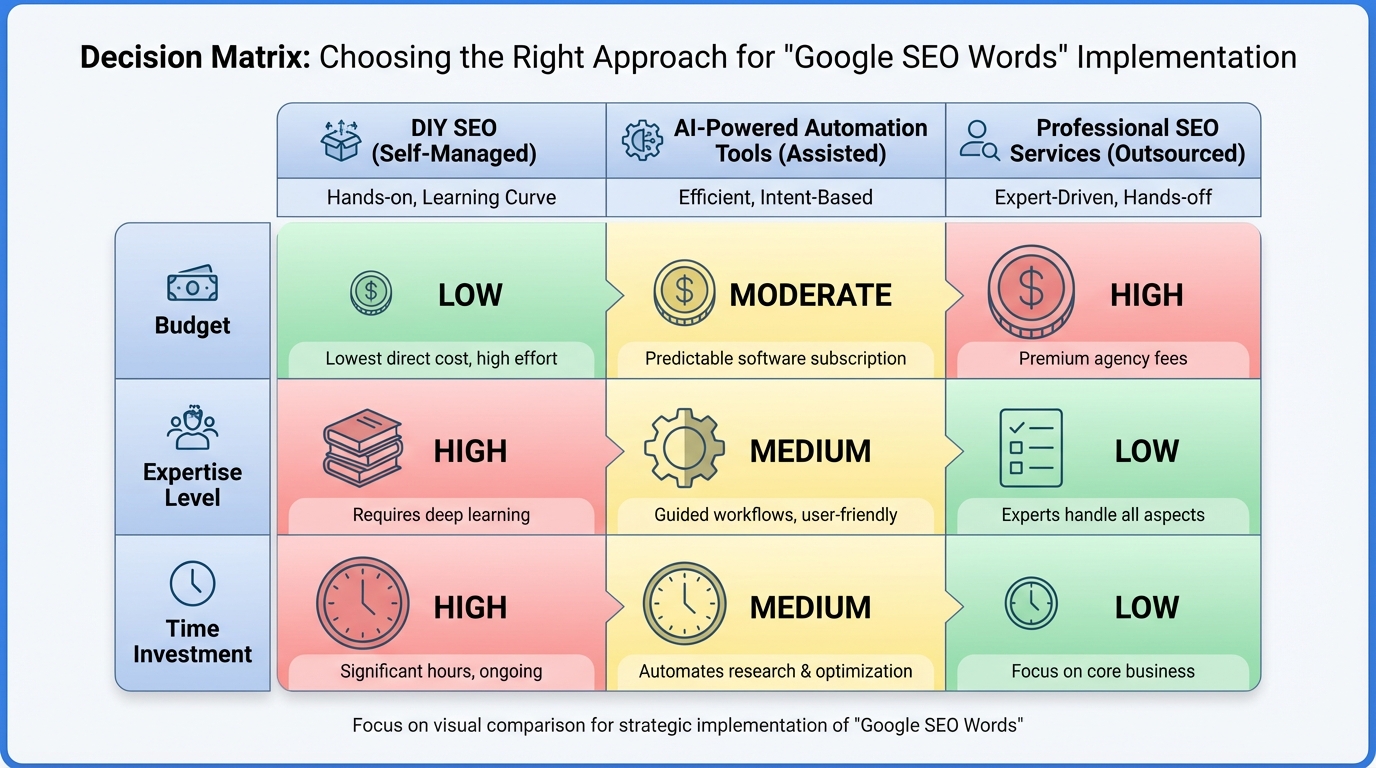
- DIY Approach: Lowest cost but highest time investment; suitable for small sites with limited budgets
- Automated Tools: Moderate cost with significant time savings; ideal for growing businesses that need to scale
- Agency Services: Highest cost but complete execution; best for established businesses with substantial budgets
- Hybrid Model: Combine tools for research and tracking with freelancers for content creation
Many successful businesses start with DIY or automated tools, then transition to agency support as they scale and their needs become more complex.
Conclusion: Mastering Google SEO Words for Long-Term Success
Understanding and effectively implementing Google SEO words represents one of the most powerful strategies for driving sustainable organic growth. From identifying high-value keywords through comprehensive research to optimizing content for search intent and tracking performance with precision, every step in the process contributes to your overall success.
The key takeaways for building a winning keyword strategy include:
- Focus on search intent rather than just search volume when selecting keywords
- Leverage both Google's free tools and advanced seo marketing tools for comprehensive research
- Implement keywords strategically across all on-page elements without over-optimizing
- Build topic clusters around core themes to establish topical authority
- Monitor performance consistently using webmaster tools google search console and analytics
- Stay current with emerging trends like voice search and AI-generated results
- Choose tools and services that align with your budget, expertise, and growth stage
Remember that SEO is a marathon, not a sprint. While some tactics deliver quick wins, sustainable success comes from consistent effort, continuous learning, and adapting to algorithm changes and market dynamics.
The competitive advantage goes to businesses that combine strategic keyword targeting with high-quality content creation, technical excellence, and comprehensive performance tracking. This holistic approach ensures you're not just driving traffic, but attracting the right visitors who convert into customers.
Ready to transform your keyword strategy and accelerate your organic growth? Visit IntentRank to discover how AI-powered SEO automation can help you identify high-value Google SEO words, create optimized content, and rank faster without the manual effort. Our platform combines intelligent keyword research, automated content optimization, and performance tracking in one comprehensive solution designed specifically for founders and marketing teams who want to scale their organic traffic efficiently. Start your free trial today and experience the power of intent-based SEO automation! 🚀
Article created using IntentRank


